Use DEAL26 for 10% off all orders

Succulents Box January 2019 Care Guide

3 min read

Succulents Box January 2019 Care Guide

0 Comments

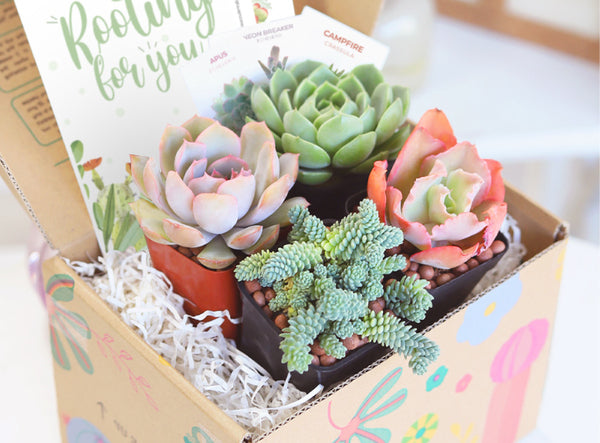
Happy New Year!!! Let welcome 2019 with our January box featuring: Graptoveria Debbie, Gasteria Little Warty, Graptoveria Moonglow and Echeveria Blue Fairy. Here's our detailed care guide for them. 


1. Graptoveria Debbie 


Graptoveria ‘Debbie’ is an Echeveria hybrid with beautiful rosettes of fleshy gray-purple leaves. The tips of these leaves can turn into a vibrant pink color when stressed. Graptoveria ‘Debbie’ offsets readily to for a dense clump. It produces tiny orange flowers in the spring. This plant is perfect to grow in planters outdoors in frost-free areas. it is a tender soft succulent and needs to be protected from frost during the coldest months of winter.

Sun exposure: Full sun.
Soil: Gritty, Porous and Well-Drained.
Water: Water thoroughly when soil is dry to the touch, then let drain completely. Avoid letting water sit for too long in the soil to prevent rot and fungal diseases. Reduce watering to a minimum in the winter.
Fertilizer: Feed once with a weak fertilizer at the beginning of the growing season (Spring or Summer).
Propagation: You can propagate Graptoveria ‘Debbie' by seeds, leaf cuttings or offsets.

Hardiness: USDA Hardiness Zone 9a: Minimum 20° F (-6.7° C)


2. Gasteria Little Warty 


Related articles

How to Care for Stenocactus multicostatus Brain Cactus

6 min read

The Stenocactus multicostatus, commonly called brain cactus, is a small globular cactus with distinctive wavy ribs that resemble a brain. This guide covers everything you need to know about watering, light, soil, and propagation for healthy growth. Learn how to keep your brain cactus thriving in any indoor or outdoor space.

How to Pollinate Air Plants

6 min read

Air plants can produce seeds after their flowers are successfully pollinated. Indoors, where natural pollinators may be limited, hand pollination gives growers a simple way to help the process along. The basic method involves transferring pollen from the anthers of one flower to the receptive stigma of another. Successful pollination may eventually produce long seed capsules filled with tiny, fluffy Tillandsia seeds. Learning this process is also the first step toward growing air plants from seed or experimenting with Tillandsia hybrids.

Yellow and Brown Calathea Leaves: Causes and How to Fix

6 min read

Yellow and brown Calathea leaves can result from overwatering, dry soil, low humidity, water quality, too much sunlight, fertilizer buildup, temperature stress, or pests. Learn how to identify the cause and help your Calathea produce healthier new growth.

Our care guides and planting tips are crafted by seasoned gardeners and plant enthusiasts who bring a wealth of hands-on experience to every piece of content. We take pride in offering meticulously researched and human-written advice to ensure the highest quality information for our fellow plant lovers. Each article is written with care and expertise, not auto-generated by AI, to help you keep your plants healthy and happy.
Back to Top