




Peperomia polybotrya Raindrop is a semi-succulent plant native to the rainforests of Colombia, Ecuador, and Peru. This is not a hybrid, but a naturally occurring species in the diverse Peperomia genus—one that includes over a thousand varieties. In recent years, this particular species has carved out its place in the world of houseplants thanks to its distinct look and easygoing care routine. With glossy, heart-to-teardrop-shaped leaves and a compact, upright growth habit, Raindrop Peperomia is a plant that manages to stand out while staying surprisingly simple to care for.
Its name, polybotrya, loosely refers to “many clusters” or “many shoots,” describing the plant’s tendency to branch out as it matures. Though it’s long been part of botanical collections, it became more widely available to home growers in the last two decades, as the demand for compact, manageable indoor plants grew. With its tidy size—typically no more than 12–15 inches tall—and striking leaf shape, it’s been a natural fit for modern indoor gardening.
This plant became suitable for apartments, offices and small spaces, as it adapts well to pot life, tolerates medium light conditions, and doesn’t demand constant watering. Peperomia polybotrya thrives in containers and doesn’t need a lot of space to grow, making it perfect for windowsills, desktops, and bookshelves. Its manageable size, slow to moderate growth, and tidy habit mean it won’t quickly outgrow its pot or take over your space, which is ideal for our modern, busy life.
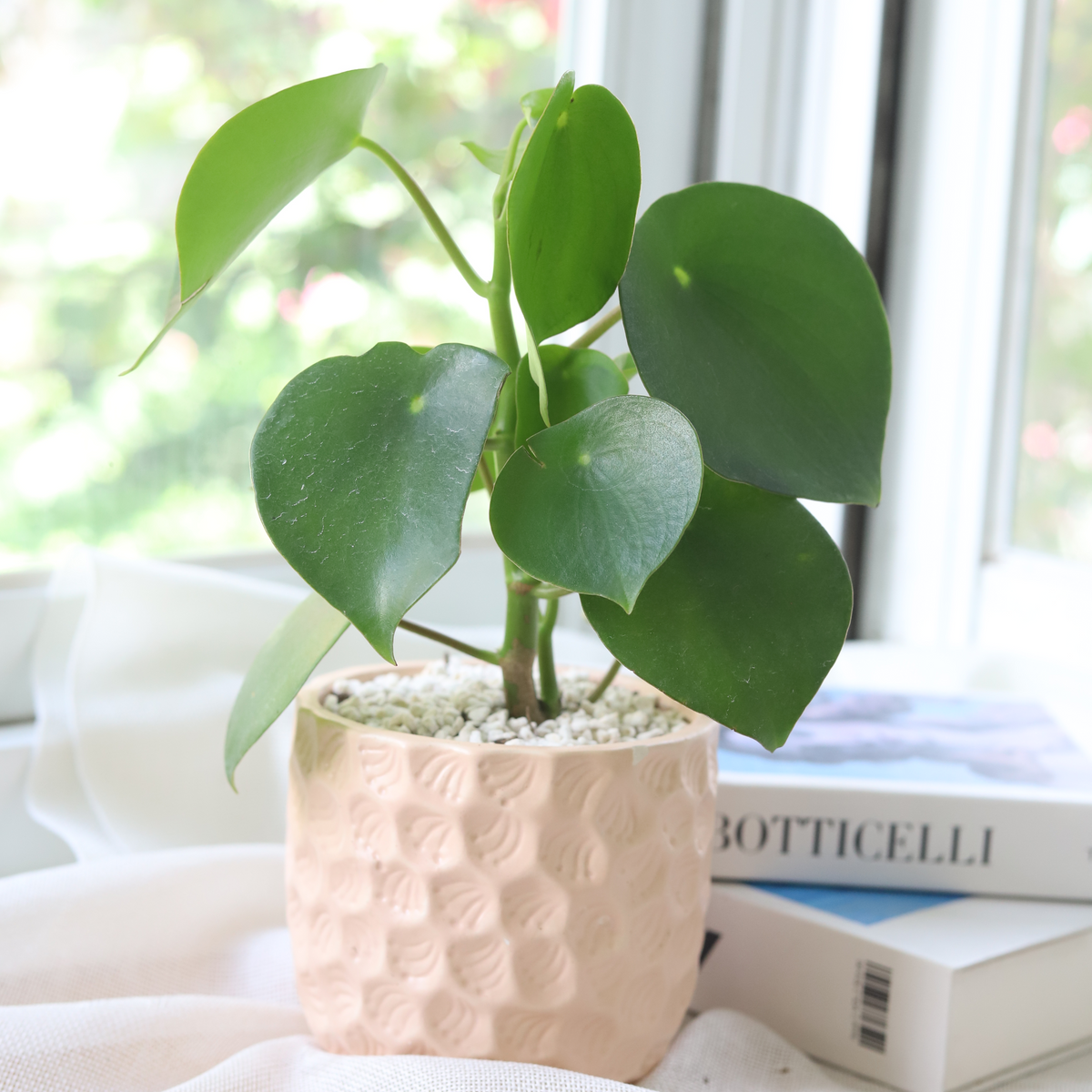
Image by Succulents Box
Peperomia polybotrya vs. Pilea peperomioides (Chinese Money Plant): What’s the Difference?
Peperomia polybotrya Raindrop and Chinese Money Plant (Pilea peperomioides) are often confused at first glance due to their similar round leaves and compact size, but they are completely different species with distinct characteristics.
Peperomia polybotrya has thick, succulent-like leaves shaped like teardrops or raindrops, with a glossy, rich green surface and a more upright growth habit. Its stems are sturdier, and the plant tends to grow in a more clustered, vertical form. It stores water in its fleshy leaves and stems, which makes it more drought-tolerant than many houseplants.
Chinese Money Plant, on the other hand, has flatter, thinner, coin-shaped leaves with long petioles that give the foliage a floating appearance. It grows outward in a more spreading, umbrella-like shape and produces lots of small offshoots (pups) from its base, which makes it easy to propagate.
While both are low-maintenance and well-suited for indoor environments, Peperomia polybotrya prefers slightly more humidity and lower light, while Pilea thrives in brighter conditions and benefits from regular rotation to keep its growth balanced.
Can Peperomia polybotrya Grow Outdoors?
Peperomia polybotrya Raindrop can grow outdoors, but only in warm, frost-free climates. It is best suited for USDA hardiness zones 10 to 12, where temperatures remain consistently above 50°F. In these regions, it can thrive outdoors in shaded patios, under tree canopies, or in sheltered garden beds that mimic its natural tropical environment.
Because this plant is sensitive to cold and doesn’t tolerate direct, harsh sunlight, outdoor growing conditions must provide filtered light and protection from temperature drops, especially at night. In cooler zones, it’s best to keep Raindrop Peperomia in containers so it can be moved indoors when the weather gets too cold or dry.
If grown outdoors, always ensure the plant is sheltered from heavy rain and direct sun, and monitor humidity levels. With the right care and climate, it can adapt well and even grow more vigorously in fresh air and natural humidity.
General Care
Lighting
Peperomia polybotrya ‘Raindrop’ thrives best in bright, indirect light, but its adaptability makes it a great fit for a variety of indoor environments. Near an east- or north-facing window, it can soak up gentle sunlight without risk of leaf scorch. If placed in front of a south- or west-facing window, it’s best to filter the light with sheer curtains to prevent harsh rays from damaging its thick, fleshy leaves.
While this plant prefers brighter conditions, it can tolerate medium light and even adapt to office environments with artificial lighting. If your workspace relies mostly on fluorescent or LED lights, Raindrop Peperomia can still grow steadily, though it may become slower to develop new leaves. While the foliage might not be quite as vibrant as when grown in natural light, the plant’s overall health usually remains stable. In spaces with very low light levels or during winter months when daylight is limited, a supplemental grow light can help maintain growth and prevent legginess or leaf drop.
Outdoors, this plant should only be grown in shaded or semi-shaded areas protected from direct sun. It is not suited for harsh afternoon light, which can cause burns on the leaf surface. A covered porch, shaded balcony, or spot under a tree canopy works well—someplace bright but with soft, filtered light. Whether indoors or outside, balanced, indirect lighting encourages strong, healthy growth and helps Raindrop Peperomia keep its charming, compact form.

Image by Succulents Box
Watering
Peperomia polybotrya Raindrop prefers a careful, moderate watering routine that mimics the conditions of its native tropical habitat without overdoing it. As a semi-succulent, this plant stores water in its thick, teardrop-shaped leaves, which means it doesn’t need frequent watering and is more tolerant of dryness than overwatering.
The best approach is to allow the top inch or two of soil to dry out completely before watering again. In general, watering once every 7 to 10 days during the growing season (spring and summer) is sufficient, though this depends on factors like light, temperature, and humidity. In lower light conditions or during cooler months, reduce watering to every two to three weeks, always checking the soil first.
It's crucial to avoid letting the plant sit in soggy soil or waterlogged pots, as this can quickly lead to root rot—a common issue for Peperomias. Always use pots with good drainage and tip out any excess water left in the saucer after watering. If the leaves begin to wilt or feel soft, it could be a sign of underwatering, while yellowing, mushy leaves often point to too much moisture. When in doubt, it’s better to underwater slightly than to overdo it. This plant is built to handle a bit of drought but won’t bounce back as easily from overly wet conditions.
Soil and Fertilizer
Peperomia polybotrya Raindrop thrives in loose, airy, and well-draining soil. Because its roots are relatively fine and sensitive to excess moisture, the best soil mix mimics the lightness of orchid bark with the moisture retention of a good potting blend. A combination of standard houseplant potting mix amended with perlite, orchid bark, or coarse sand works well. Some growers even use a succulent mix with added coco coir or peat moss to strike a balance between drainage and moisture. The key is to avoid heavy or compacted soils that can hold too much water and suffocate the roots.
When it comes to feeding, Peperomia polybotrya doesn’t demand much. During its growing season (spring and summer), a light feeding once a month with a balanced, water-soluble houseplant fertilizer diluted to half strength is usually enough. Avoid over-fertilizing, as this can lead to salt buildup in the soil, which may cause leaf tip browning or root damage. In fall and winter, when the plant’s growth naturally slows, hold off on fertilizing altogether to avoid stressing the roots. If you repot the plant in fresh soil each year or two, that alone will replenish some nutrients without the need for heavy feeding. This plant appreciates moderation—in both watering and fertilization—which makes it easy to care for even if you're not a meticulous plant parent.
Temperature and Humidity
Peperomia polybotrya Raindrop prefers warm, stable indoor temperatures between 65°F and 80°F, which makes it well-suited for most home and office environments. It does not tolerate cold temperatures or drafts. If exposed to temperatures below 50°F, the plant can suffer stress, leaf drop, or even root damage. Avoid placing it near open windows in the winter or near air conditioners and heating vents, where sudden fluctuations can harm its growth.
This plant also appreciates moderate humidity, ideally around 40% to 60%. While it can tolerate average indoor humidity levels, prolonged dry air—especially during winter—may cause leaf edges to turn brown or crispy. If your indoor air is particularly dry, you can boost humidity by placing a small humidifier nearby, grouping it with other plants, or setting the pot on a pebble tray filled with water. However, it’s not as demanding as tropical plants and won’t require constant misting. Just keeping it away from very dry, drafty spots will go a long way toward keeping it healthy and hydrated.
Toxicity
Peperomia polybotrya Raindrop is considered non-toxic to both humans and pets, making it a safe choice for homes with curious cats, dogs, or children. This plant does not contain harmful compounds that would pose a risk if accidentally ingested. While it’s always best to discourage pets or children from chewing on any plant—mainly to prevent stomach discomfort or damage to your plant—this one doesn’t carry the same risks as many other common houseplants.

Image by Succulents Box
Extra Care
Potting and Repotting
When you first bring home a Peperomia polybotrya Raindrop from the nursery, it’s usually in a plastic grow pot. While it can stay there for a while, transferring it into a more permanent container will help with long-term health and aesthetics. Choose a small to medium-sized pot that’s just slightly larger than the root ball, ideally with drainage holes. Peperomias prefer shallow pots that match their relatively shallow root systems. Terracotta or ceramic are some great choices, as these materials allow the soil to dry more evenly, which is important for preventing root rot.
To pot the plant, gently loosen the root ball and remove some of the old soil if it's tightly packed or soggy. Place it in fresh, well-draining soil—something light and airy like a houseplant mix with added perlite or coarse sand. Make sure the base of the plant sits just above the soil line and water lightly after planting.
Repotting is only necessary every two to three years, or if the plant becomes root-bound or the soil degrades. When repotting, move up only one pot size and refresh the soil completely. Peperomia doesn’t like too much extra space, which can lead to overwatering issues. A light trim of old roots and a fresh mix will help the plant stay healthy and maintain its compact form.
Pruning
Peperomia polybotrya Raindrop doesn’t require much pruning, but a little occasional maintenance can help keep it looking tidy and encourage bushier growth. Since it naturally grows in a compact, upright shape, pruning is mainly about removing dead or damaged leaves, especially those that yellow or droop due to age or overwatering. Use clean, sharp scissors or pruning shears and snip the leaf stem close to the base.
You can also pinch back new growth if the plant starts to get leggy or uneven. This signals the plant to branch out and produce more side shoots, which gives it a fuller appearance. Pruning should be done during the growing season—spring and summer—when the plant is actively putting out new leaves. Avoid heavy trimming in winter, when growth slows. Do not over-prune. Removing too many leaves at once can stress the plant. A light hand and a regular check-in every few weeks are all it takes to keep your Raindrop Peperomia looking fresh and healthy.
Propagation
Peperomia polybotrya can be propagated through stem cuttings, leaf cuttings, or division, though not all methods are equally reliable. The easiest and most effective method is stem cuttings. To do this, take a healthy stem with at least one leaf and a visible node, and either place it in water or directly into moist, well-draining soil. If rooted in water, change the water regularly to prevent stagnation and watch for new roots in a few weeks. Once the roots are a couple inches long, the cutting can be transferred to a pot.
Propagation from a single leaf without any stem is possible, but less consistent. For this method, take a healthy mature leaf with a short section of its petiole attached, and place it in soil or water. Leaf cuttings may eventually root and form small plantlets, though this process takes longer and doesn't always succeed.
Division is another option during repotting. If your plant has developed multiple clumps, you can gently separate and pot them individually. This method gives you a head start with an already rooted section and is less stressful for the plant overall.
Spring and early summer are the best times to propagate, when the plant is actively growing. Whichever method you choose, keep the cuttings in a warm, humid environment with bright, indirect light, and be patient—it may take several weeks to see new growth.
Common Problems
Peperomia polybotrya is generally a trouble-free plant, but like any houseplant, it can show signs of stress when its growing conditions are off. The most common issue by far is overwatering. Since this plant has semi-succulent leaves that hold moisture, it’s very sensitive to sitting in soggy soil. If the pot doesn’t drain well, or if it’s watered too frequently, root rot can develop. This typically shows up as yellowing, droopy leaves, soft or mushy stems, or an unpleasant smell from the soil. In more advanced stages, the plant may collapse from the base upward.
Underwatering can also cause problems, though it tends to happen more gradually. When the plant doesn't get enough water, especially in dry indoor air, the leaves may start to curl inward or wrinkle slightly. The plant may look deflated or limp—not just dry at the tips, but thin and lifeless. A thorough but careful watering usually revives it if caught early.
Leaf drop is another potential issue and is often linked to environmental stress. This can happen after a sudden change in temperature, such as moving the plant too close to a drafty window or air conditioner. It can also occur if the plant is relocated from a bright area to a dim one, or vice versa, too abruptly. Although Peperomia polybotrya can tolerate medium to low light, extended periods in low light can result in leggier growth and sparse foliage, especially on older plants.
Pest infestations are uncommon, but when they do occur, they tend to be related to overly damp conditions or stagnant air. Mealybugs and fungus gnats are the most common culprits. You may also occasionally see spider mites, especially in dry, dusty homes. Regularly wiping down the leaves, letting the soil dry out properly between waterings, and maintaining good airflow around the plant are good preventative measures.


