





Crassula Springtime is one of the most beloved varieties in the Crassula family thanks to its charming appearance and its ability to produce beautiful blooms when properly cared for. Its plump, glossy green leaves form neat clusters, and under the right conditions, the plant bursts into adorable star-shaped flowers in shades of soft pink or white pink from late winter to early spring. Though the blooms are small, they are truly delightful, a little “reward” for the time and attention you have devoted to your plant.
However, many plant lovers find themselves puzzled when their Crassula Springtime looks perfectly healthy, with lush leaves and steady growth, yet refuses to bloom. If that sounds familiar, this article is for you. Let’s explore the key care essentials of this plant, uncover the common reasons it might not flower, and discover how to help it bloom beautifully year after year.

Caring for Your Crassula Springtime
Crassula Springtime is a hybrid succulent that combines charm and resilience, making it perfect for both beginners and collectors. It forms compact rosettes of plump, glossy green leaves with slightly scalloped edges, often tinged with pink when exposed to bright sunlight. Over time, the rosettes grow into a neat mound that stays beautiful year-round, even when not in bloom.
Like most Crassulas, this variety enjoys bright, indirect sunlight and well-draining soil. A mix designed for succulents or cacti works best, as it allows excess water to escape easily and prevents root rot. When watering, use the “soak and dry” method: water thoroughly until excess water drains out, then allow the soil to dry completely before watering again. During its growing season, from late winter to early spring, you can water a bit more frequently, but always check the soil first to avoid overwatering.
Crassula Springtime thrives in temperatures between 60°F and 75°F and appreciates a few cooler nights, which help trigger blooming. It can tolerate brief dips in temperature but should be protected from frost. Fertilize lightly during the growing season with a diluted, balanced fertilizer once every four to six weeks. In winter, reduce watering and feeding to let the plant rest.
Because of its compact growth habit, this succulent looks stunning in small pots, tabletop arrangements, or even as part of a mixed succulent garden. It rarely needs repotting, but when it does, choose a pot only slightly larger than the current one to maintain its shape and encourage future blooms.
Seasonal Timing
One of the first things to know about Crassula Springtime is that it follows a natural seasonal rhythm. This plant typically blooms from late winter through early spring after experiencing a period of cooler temperatures and reduced watering. Expecting flowers in summer or autumn often leads to disappointment because the plant simply isn’t in its active blooming phase.
To encourage healthy flowering, mimic its natural environment as closely as possible. During the cooler months, give your plant a rest period with less water, lower nighttime temperatures around 55 to 65°F, and bright indirect sunlight. This dormant phase allows your Crassula to gather energy and prepare for the bloom cycle ahead. Once the days start to lengthen and temperatures rise slightly, you’ll notice tiny buds forming between the leaves, a beautiful reward for your patience and care.
Why Doesn't My Springtime Crassula Bloom?
Insufficient Light
Light is one of the most important factors influencing whether or not your Crassula Springtime blooms. This succulent thrives in bright light and needs plenty of it to build enough energy for flowering. Without sufficient light, the plant focuses on leaf growth rather than reproduction.
If you’re keeping your Crassula indoors, place it near a bright south- or west-facing window where it can receive at least four to six hours of bright, indirect sunlight daily. Avoid placing it in deep shade or dim corners. For homes with limited natural light, consider using a grow light to supplement exposure. Rotate your plant every week or two so all sides get even light, preventing one-sided growth and encouraging balanced energy distribution, which is essential for budding.
Improper Watering
Water plays a major role in the overall health and blooming pattern of Crassula Springtime. Both overwatering and underwatering can interrupt its natural rhythm. Soil that stays wet for too long prevents roots from breathing and creates stress that discourages flower production, while prolonged dryness leaves the plant without enough moisture to form buds.
The ideal approach is the classic soak and dry method. Water deeply until excess moisture drains from the bottom of the pot, then allow the soil to dry out completely before watering again. During its active growing season, which typically begins in late winter and continues through spring, the soil should stay lightly moist but never soggy. When growth slows, watering should be reduced to support a gentle rest period.
Maintaining this balanced cycle helps the Crassula store energy efficiently, preventing root problems and creating the stable conditions needed for flower buds to develop. Consistent care, rather than frequent watering, keeps the plant strong and ready to bloom when the season arrives.
 Image by @ruzgareken
Incorrect Temperature
Temperature plays a key role in helping your Crassula Springtime bloom. In its natural habitat, this succulent enjoys warm days and cooler nights, especially during winter and early spring — a rhythm that signals it’s time to flower. When kept in an environment that stays constantly warm, your plant may never sense that seasonal change, and instead, it continues focusing on leafy growth rather than blooms.
To encourage budding, try letting your Crassula experience gentle temperature differences between day and night. Keep it in a bright spot where daytime temperatures stay around 60–70°F and allow the temperature to drop slightly to 55–60°F at night. This subtle shift mimics its natural growing conditions and helps trigger the flowering process.
If possible, give your plant a mild “cool rest” period during late autumn and winter. You can place it in a bright but cooler area of your home, such as near a window away from heating vents. Once spring arrives, the combination of brighter light and warmer days will naturally encourage your Crassula to send out those lovely pink flower clusters.
Overfertilization
Fertilizer, when used improperly, can do more harm than good. Giving your Crassula too much nitrogen can cause it to grow plenty of leaves but no flowers. When nutrients are abundant, the plant has no reason to reproduce, which means flowering is delayed or skipped entirely.
To promote blooming, use a balanced fertilizer or one that’s slightly higher in phosphorus—the element that supports flower development. Feed lightly once a month during the active growing season, always diluting the fertilizer to half strength. Avoid fertilizing in winter when the plant is resting. This balanced feeding schedule gives your Crassula the gentle boost it needs without disrupting its natural rhythm.
Pot size and root space
The size of your pot can also influence whether or not your Crassula blooms. A pot that’s too large encourages the plant to focus on root and leaf growth instead of producing flowers. Slightly root-bound Crassulas, on the other hand, are more likely to bloom because they sense space is limited and redirect energy toward reproduction.
When repotting, choose a pot that is only about one inch larger in diameter than the root ball. Always use containers with drainage holes to prevent water buildup, and opt for breathable materials like terracotta that allow the roots to dry between waterings. Repotting every two to three years in fresh soil is usually enough to keep your Crassula healthy and ready to flower.
Other factors to consider
If you’ve checked all the basics and your Crassula still isn’t flowering, patience might be the final ingredient. Some young plants simply need more time to mature before they’re ready to bloom. It can take a couple of years for a Crassula ‘Springtime’ to reach full flowering maturity. Environmental stress, such as moving the plant too often, repotting at the wrong time, or inconsistent care, can also delay blooming.
Keep your plant stable, comfortable, and stress-free. Over time, it will adjust to its environment and reward your consistency with a flourish of pink, starry flowers that make all the effort worthwhile.
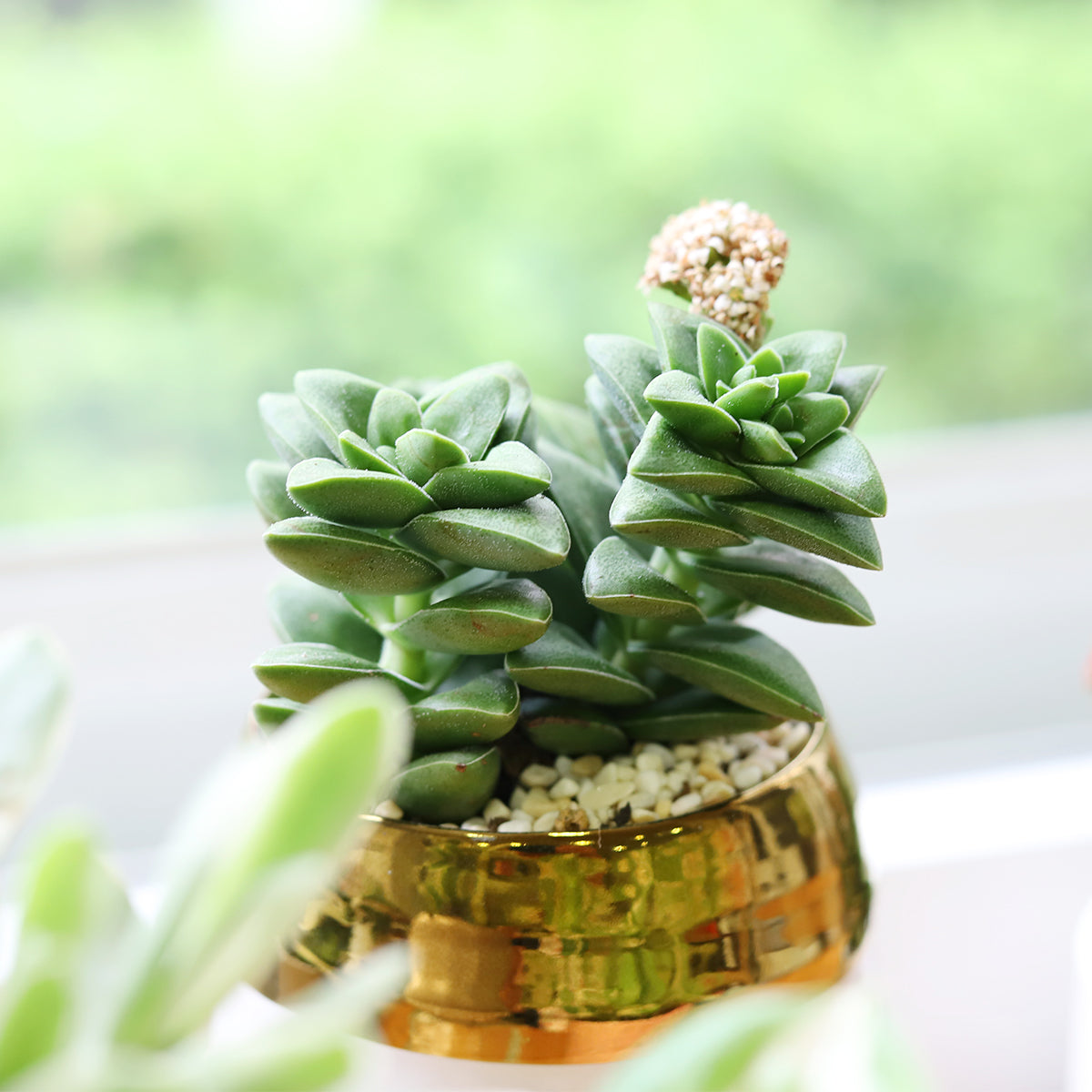
Image by Succulents Box
After-Bloom Care
Once your Crassula Springtime finishes blooming, it’s time for a well-deserved rest. Trim away any spent flower stalks to keep the plant tidy and encourage new leaf growth. During this recovery phase, reduce watering slightly and stop fertilizing for a few weeks. The plant will shift its energy back to storing nutrients in its leaves, preparing for the next growth cycle.
Keeping your Crassula in bright light during this period ensures it maintains its compact, vibrant look. Even without flowers, the rosettes remain beautiful and bring a soft, natural touch to your indoor space.
Common Myths About Blooming
Many plant owners believe that pruning or frequent repotting can make their Crassula bloom faster, but in reality, both can delay flowering. Repotting too often resets the plant’s growth cycle, and heavy pruning can remove stems that would have produced buds. Another common myth is that stress or neglect can “force” a succulent to bloom. While mild environmental stress like cooler nights can help, chronic stress from poor care will only weaken the plant.
Blooming is a natural response to balanced conditions, not a reaction to stress. Focus on providing consistent care—steady light, moderate watering, seasonal temperature changes—and your Crassula will eventually reward you with its delicate pink blossoms.
Bringing It All Together
Encouraging your Crassula Springtime to bloom is less about forcing it and more about creating the right environment for it to thrive. When your plant receives the perfect balance of sunlight, water, cool temperatures, and nutrients, it naturally enters its flowering phase. It may take time, but patience always pays off.
Watching your Crassula transform from a cluster of glossy leaves into a burst of soft, fragrant flowers is one of the most satisfying moments for any plant lover. It’s a gentle reminder that plants, like people, bloom best when cared for with consistency and love.


