


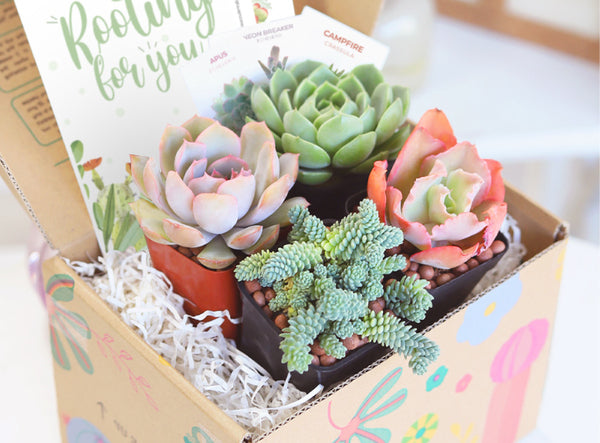


Can't believe September has already come! This month our box features Crassula Ovata, Echeveria Chroma, Cinnamon Cactus & Key Lime Pie
1. Crassula Ovata
 Crassula Ovata Obliqua (Jade Plant) is native to South Africa, is a succulent shrub that can reach 4-6 feet tall. Its shiny leaves have pointed tips and sprout from thick branches and can flush royal purple at the edges when exposed to direct sun.
 White star-like flowers bloom in clusters within the foliage in the fall.
 Full sun to partial shade.
 Well-Drained, Porous, Gritty. Optimal pH is around 6.0 (slightly acidic).
 Water thoroughly when soil is dry to the touch, then let drain completely. Avoid letting water sit for too long in the soil to prevent rot and fungal diseases. Reduce watering in the winter.
 Feed with a controlled-release fertilizer at the beginning of the growing season.
Hardiness: USDA Hardiness Zone 10a to 11b: from 30 °F (-1.1 °C °C) to 50 °F (10 °C).
2. Echeveria Chroma
Echeveria Chroma is a darker color succulent with variegated leaves of various colors: pink, orange, red, brown, purple. The rosettes can grow up to 3 inches in diameter. It has a shrubbing habit and can produce several offsets. Its flowers are lovely orange, bell shape, ad adored by hummingbirds and butterflies.
Full Sun, Filtered Sun, Part Shade. Porous and well-drained succulent mix . Avoid letting water sit for too long in the rosette to prevent rot and fungal diseases. . Dead leaves should be removed from the plant as soon as possible to ward off pests.
3. Cinnamon Cactus
 Opuntia Rufida Minima is a miniature prickly pear version also known as Cinnamon Cactus which only grows to approx. 8" to 10" in height. The pads are covered with very small brownish-cinnamon colored spines or glochids. Very compact and self branching a good variety for growing as a houseplant or placement outdoors in frost-free locations in the rock garden. Its spikes are small therefore you have to be careful when touching it.
Prefers bright light and ample airflow. Clay Soil, Sandy Soil, Loamy Soil, Drought/Dry Soil. Water thoroughly when soil is dry to the touch. Water with caution in winter, as the plant can lose its roots if the soil stays cold and wet for extended periods. Protect from frost.
USDA Zone 9a to 11b: from 20 °F (−6.7 °C) to 50 °F (+10 °C).
4. Key Lime Pie
Adromischus Cristatus, also called Key Lime Pie, is a cute succulent with chubby dark green leaves that have wavy tips like those of clam shells. The leaves are arranged to form a loose rossette. Adromischus Cristatus produces whitish tubular flowers on thin long stalk coming from the rosette center. If underwatered, the plant will shoot out reddish aerial roots along the stem.
Porous soil with extra drainage. Bright Light.
USDA Zone 9b: to -3.8 °C (25 °F)
USDA Zone 10a: to -1.1 °C (30 °F)
USDA Zone 10b: to 1.7 °C (35 °F)
Want to learn more about
HOW AND WHEN YOU SHOULD BOTTOM WATER YOUR SUCCULENTS?
If you found this article interesting, share it with your succulent loving friends!
And get a free plant when your friends make an order. Sign up here!
Learn more about how to nurture and enjoy many gorgeous succulents and clever decoration tips with our newsletter. Let's sign up!


