


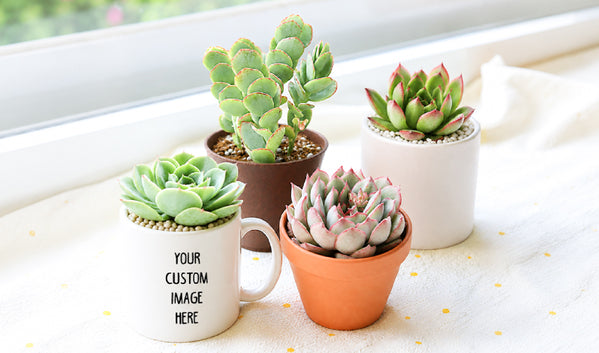


Cereus Coral Green Cactus is a sculptural variety known for its twisting, coral-like stems and blue-green color. It thrives in bright, direct light and requires infrequent watering with completely dry soil between waterings. Excellent drainage is essential to prevent root rot, especially during winter dormancy. Warm temperatures and minimal humidity needs make it easy to maintain indoors. With the right care, this striking cactus becomes a bold focal point in any sunny space.
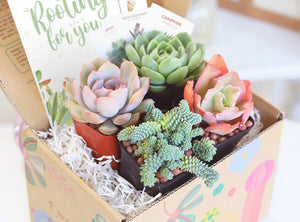
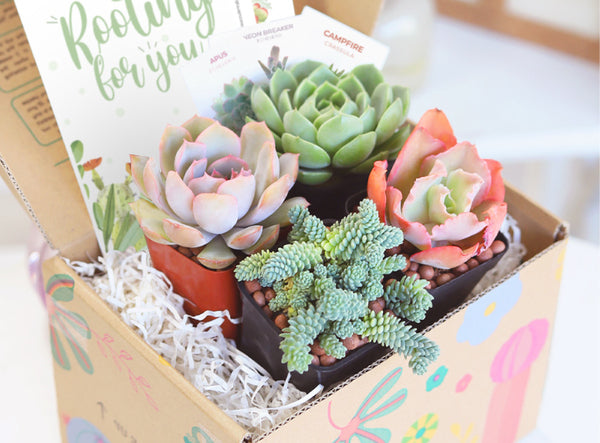
Our March box featuring Echeveria Hercules, Rosary Vine, Woolly Senecio, Echeveria Melaco Brown Rose and Tillandsia Caput Medusae
1. Echeveria Hercules
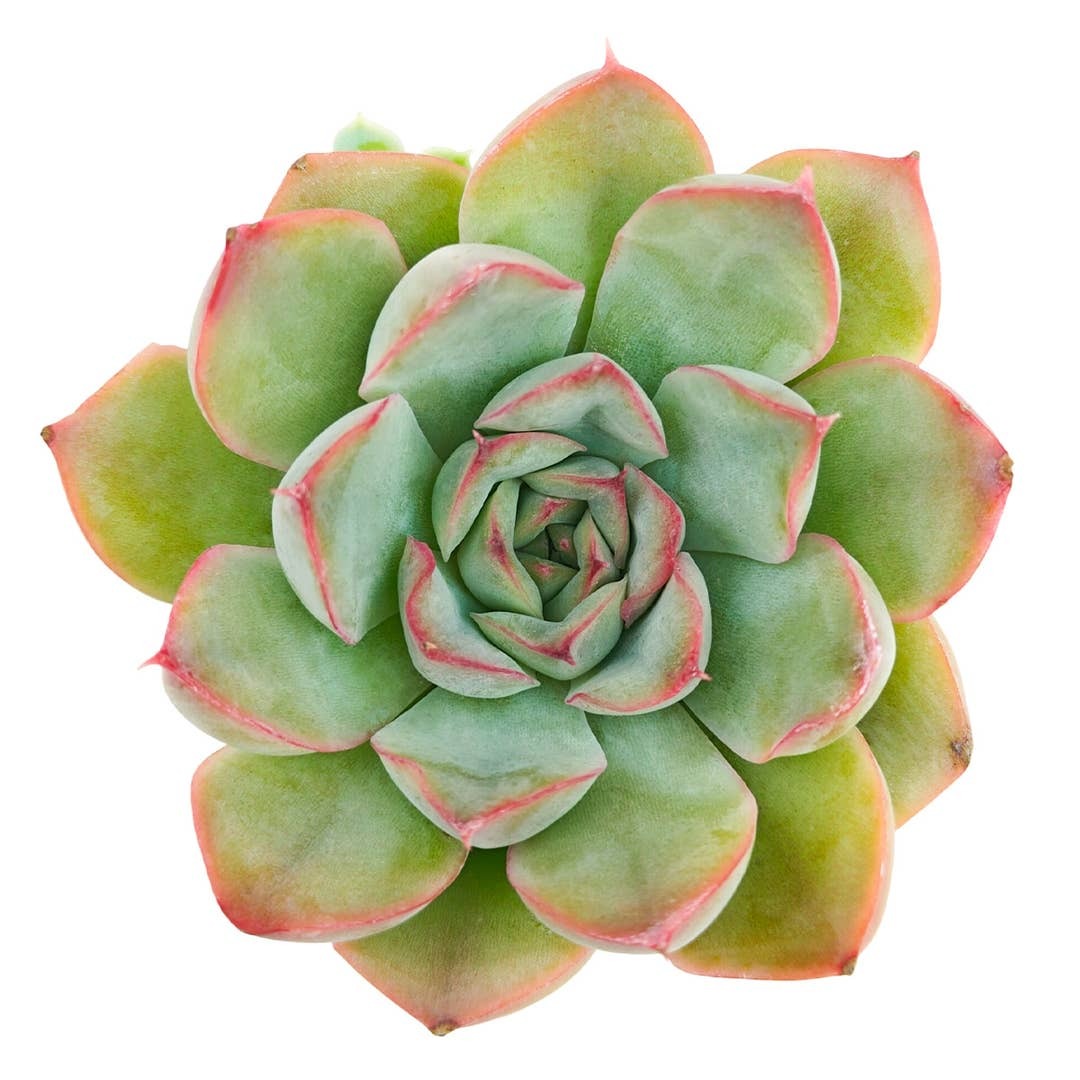
 Echeveria 'Hercules' is an evergreen succulent hybrid known for its large, thick, blue-grey leaves that form a classic, tight rosette. The leaf margins are often tinged with a delicate pink or reddish hue, which intensifies when the plant is "stressed" by sunlight or cool temperatures.
 This plant is a cultivated hybrid, believed to be a cross involving Echeveria pulidonis and Echeveria elegans. While the hybrid itself was created by breeders, its parent species originate from the rocky, arid landscapes of Mexico.
 In late spring and early summer, 'Hercules' produces long, elegant stalks that arch gracefully away from the center. These stalks carry clusters of bell-shaped flowers that are a vivid coral-pink on the outside with bright yellow interiors.
 All of the plants may be shipped bare roots.
 Prefers bright, direct sunlight. To maintain its "Hercules" strength and tight shape, aim for at least 6 hours of sun daily. It can handle partial shade, but too little light will cause it to lose its pink edges and stretch out.
Use a fast-draining succulent or cactus mix. Adding extra pumice or perlite is highly recommended to ensure the roots stay dry and aerated.
 Follow the "soak and dry" method. Water the soil thoroughly until it drains out the bottom, then allow the soil to dry out 100% before watering again.
 Feed lightly once or twice during the growing season with a diluted, low-nitrogen fertilizer. Overfeeding can cause leggy growth and weaken the plant.
2. Rosary Vine
Crassula rupestris, commonly known as the Rosary Vine or Kebab Bush, is a slow-growing, multi-branched succulent. It is famous for its "stacked" appearance; the thick, triangular leaves grow in opposite pairs and are fused at the base, making it look as though the stem has been threaded through the leaves like beads on a rosary or pieces of meat on a kebab.
Native to the dry, rocky hillsides of South Africa, this plant is built for survival. Its name rupestris literally means "living among rocks," which explains its rugged nature and preference for gritty, well-draining environments.
The Rosary Vine is a master of color and geometry. In high light, the edges of the blue-grey leaves "stress" into a vivid fuchsia or red. Its unique vertical growth habit makes it look like a miniature coral reef, providing a distinct structural element that most "rosette-style" succulents lack.
Plants may be shipped bare root.
Full sun to bright indirect light. Bright light is essential to maintain its compact shape and the vibrant red-pink margins on the leaves.
Extra gritty mix. Use a cactus soil amended with 50% pumice, coarse sand, or fine gravel to mimic its rocky native habitat.
Water the plant when the soil is dry, then let the soil dry before watering again.
3. Woolly Senecio
 This perennial succulent is native to South Africa. It is also known as a Wooly Senecio because of the white felt covering the surface of its upright cylindrical leaves. Its dwarf shrub can grow up to 1 ft (130cm). The fuzzy coverage makes Woolly Senecio an extremely intriguing plant and definitely one of the most aesthetically pleasing in its genus.
Plants may be shipped bare-root with the No Pot option. Option with pots will be shipped with soil.
Cactus potting mix with good drainage.
Water deeply when soil is dry but let drain completely. Never let the plant sit in soggy soil for more than a day or two.
Slight dappled shade.
Feed annually but lightly.
4. Echeveria Melaco Brown Rose
Echeveria Melaco Brown Rose is an attractive succulent plant up to 6 inches (15 cm) tall, with shiny, up to 6 inches (15 cm) in diameter, brownish-red rosette with green center.
The flowers are bell-shaped and orange in color.
 All of the plants may be shipped bare root.
Full Sun to Partial Shade.
Well-Drained, Gritty.
Avoid letting water sit for too long in the rosette to prevent rot and fungal diseases.
 Generally non-toxic to humans and animals.
 Needs excellent drainage in pots.
5. Tillandsia Caput Medusae
Tillandsia Caput Medusae, also known as Medusa's head plant, is an air plant that grows sturdy but soft snake-like leaves that resemsble the hair of Medusa. And when it blooms, the plant develops gorgeous blush, mauve and peach shades. Caput Medusae absorbs the majority of nutrients and water from the air though the scales (trichomes) on its leaves.
Tillandsia caput-medusae only uses its roots to cling to high trees or rocks. Since the exotic bromeliad does not require a substrate, there are many creative ways to cultivate it in living spaces. Thus, the head of Medusa with the bizarre snake-leaves perfectly puts itself in the limelight on branches, stones or cacti.
All of the plants may be shipped bare root.
Bright filtered light.
No soil is needed. Sand, sea glass, rocks, pebbles & bark chip can be used instead of soil.
Frequent misting several times a week is necessary. Medusae will also benefit from a soaking bath every month. Give it a little shake off afterwards to make sure water doesn't collect in the bottom leaves to prevent rot.

