


Our September box featuring Echeveria ‘Lolita’, Sedeveria ‘Fanfare’, Aeonium ‘Lily Pad’, Kalanchoe humilis, and Tillandsia velutina.
1. Echeveria ‘Lolita’
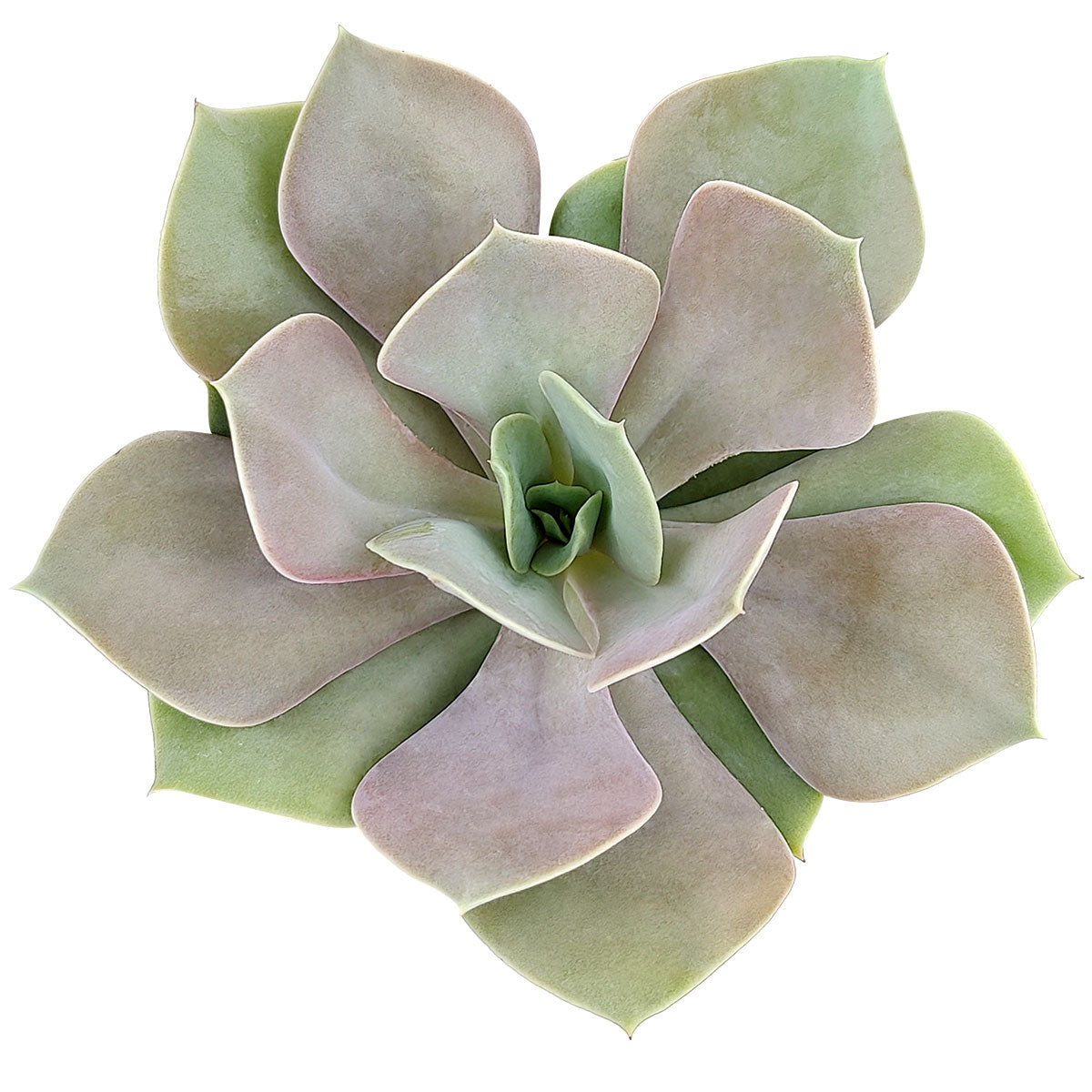
 Echeveria Lolita is a opalescent succulent from the Crassulaceae family with roots in Mexico's semi-arid highlands. It evolved to grow in bright light and fast-draining soil, making it suitable for anyone building a drought-tolerant succulent collection.
 'Lolita' forms tight, symmetrical rosettes with plump, spoon-shaped leaves that shift between soft green, pink, and purple tones. The leaf edges deepen in color when exposed to bright light, intensifying the contrast. Over time, it clusters at the base, producing offsets that fill a pot with layered, sculptural growth.
 With a deliberate drop in nighttime temperatures, 'Lolita' can produce blooms, though the seasonal color shift in the foliage itself—from soft pastels to vivid pink-purple—gives year-round visual appeal. Rotating the pot every week or two keeps it growing symmetrically and ensures all sides receive the light they need.
 Move it to a sunny patio or garden bed for summer, then bring it under cover during heavy rain to protect the rosettes from excess moisture. It is pet-friendly and non-toxic to cats and dogs. It grows indoors and outdoors equally well, whether you're creating a windowsill focal point or adding to a larger succulent display.
 Echeveria Lolita grows well in bright indirect light to full sun, with more direct exposure intensifying its pink-purple leaf tones.
 Water it deeply every 10-14 days during the growing season and reduce to once a month in winter, letting soil dry completely between waterings.
'Lolita' does best in a gritty, well-draining cactus and perlite mix to prevent root rot.
 It prefers temperatures between 60-80°F and should be protected from frost below 32°F.
 'Lolita' is a moderate grower that benefits from a diluted balanced fertilizer applied once in early spring.
2. Sedeveria ‘Fanfare’
Sedeveria 'Fanfare' is a stunning hybrid succulent created by crossing Sedum and Echeveria species. This blue-green succulent combines the best traits of both parent genera, resulting in a drought tolerant plant that's perfect for collectors and beginners alike.
Sedeveria 'Fanfare' forms compact rosettes of thick, fleshy leaves that display beautiful blue-green coloration with subtle purple undertones. The leaves are spoon-shaped and slightly pointed, creating an elegant symmetrical pattern as they spiral outward from the center. This hybrid succulent maintains its striking color year-round, making it a standout addition to any collection.
Sedeveria 'Fanfare' can stay outdoors in autumn and move outside for summer, though it needs cover from rain to prevent root rot. The plant tolerates dry heated air exceptionally well, making it ideal for indoor environments. This low maintenance succulent needs rotating for even growth to maintain its perfect rosette shape.
Sedeveria 'Fanfare' makes an excellent desk plant or indoor plant for bright windowsills and sunny spaces. This easy care succulent can survive a 10-day trip alone, making it perfect for busy plant parents or frequent travelers. The plant is pet friendly, so you can display it safely around curious cats and dogs without worry.
Sedeveria 'Fanfare' thrives in bright indirect light to direct sun conditions for optimal growth and color.
Sedeveria 'Fanfare' requires well-draining cactus and succulent soil mix with added perlite or pumice.
Water Sedeveria 'Fanfare' deeply once every 10-14 days, allowing soil to dry completely between waterings.
Sedeveria 'Fanfare' grows best in temperatures between 65-80°F (18-27°C) and isn't frost tolerant.
Sedeveria 'Fanfare' grows slowly and requires minimal fertilizer, just diluted succulent food monthly in spring.
3. Aeonium ‘Lily Pad’
Aeonium Lily Pad Rosettes is a rare, drought-tolerant succulent from the Aeonium genus in the Crassulaceae family. Native to the Canary Islands, it evolved on rocky volcanic slopes where intense sun and dry conditions shaped its remarkable ability to store water in its leaves. Collectors and plant lovers seek out this aeonium for its unmistakable flat form and minimal care demands.
Lily Pad produces wide, flat rosettes of smooth, bright green leaves that fan outward in a symmetrical circle, resembling a lily pad floating on water. The leaves are tightly packed and arranged in an almost geometric pattern. As a clustering grower, it sends out offsets from the base over time, building a layered, dense display that becomes more impressive with each passing year.
Lily Pad requires a nighttime temperature drop to trigger blooming, a natural cue that mimics its native seasonal rhythms. When conditions align, it produces a central flower spike rising from the rosette center. The plant maintains a consistently tidy, symmetrical rosette form throughout the year.
Move it outside in summer and it can remain there through autumn in mild climates. Rotate it a quarter turn every week or two for balanced, even growth. Keep it away from direct air-conditioning or heating vents that blast dry air across the foliage. Lily Pad is non-toxic, so it fits anywhere in your home without concern for cats or dogs.
Aeonium Lily Pad Rosettes grows well in bright indirect light to partial sun, tolerating full sun with some afternoon shade to prevent leaf scorch.
Lily Pad is a slow to moderate grower that benefits from a diluted balanced fertilizer applied once in spring and once in early summer.
Lily Pad does best in a fast-draining cactus and succulent mix amended with extra perlite for excellent drainage.
Water it every 10 to 14 days during the growing season, then cut back to once a month or less during winter dormancy.
It prefers temperatures between 65 and 75°F and is frost-tender below 25°F, so protect it from hard freezes.
4. Kalanchoe humilis
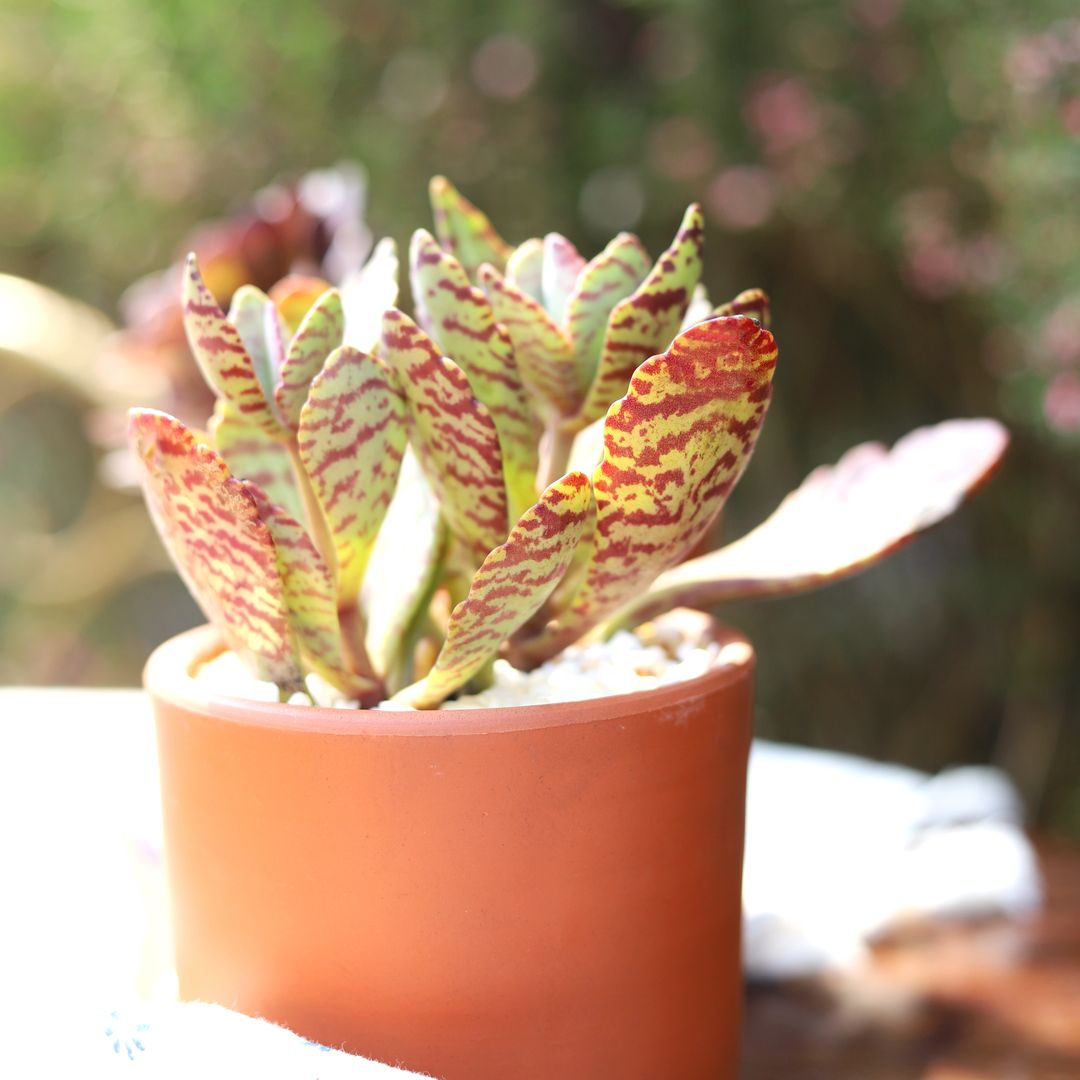
Kalanchoe Humilis "Desert Surprise" is a rare succulent native to the rocky, semi-arid regions of Madagascar. This drought-tolerant plant adapts well to dry indoor and outdoor conditions.
Its foliage features broad, fleshy leaves in soft forest green with deep purple-maroon brushstroke patterns marking the edges and surface. The upright growth habit creates a bold form that reads equally bohemian or modern depending on your space. Leaves have a slightly waxy texture.
Desert Surprise occasionally produces small, tubular blooms on upright stems above the rosette when the plant experiences a natural drop in nighttime temperatures. The purple-striped patterning on the foliage intensifies with bright indirect light, keeping it visually interesting year-round even when flowers don't appear.
 You can leave it up to ten days without water. Move it outside once temperatures warm up, then bring it back indoors before autumn rains begin, as it needs protection from prolonged wet weather. Desert Surprise works equally well on a sunny windowsill, a sheltered patio table in summer, or grouped with other architectural succulents in a curated indoor display. Keep it on a high shelf well out of reach of pets and small children, since the sap can cause skin and paw irritation.
Kalanchoe Humilis "Desert Surprise" grows well in bright indirect light and may scorch in a south-facing window with intense direct sun.
Desert Surprise does best in a gritty, well-draining cactus and succulent mix amended with perlite.
Water it every 10-14 days, allowing the soil to dry out completely between waterings.
Desert Surprise is a slow to moderate grower that benefits from a balanced liquid fertilizer once monthly during spring and summer only.
It prefers temperatures between 60-85°F and should be protected from frost below 50°F.
5. Tillandsia velutina
Tillandsia Velutina is an elegant air plant with soft, sage green leaves. Velutina is very easy to grow despite its delicate appearance. The purple flowers look gorgeous when in bloom.
 All of the plants may be shipped bare root.
Bright filtered light.
No soil is needed. Sand, sea glass, rocks, pebbles & bark chip can be used instead of soil.
Frequent misting several times a week is necessary. Tillandsia Velutina will also benefit from a soaking bath every month. Give it a little shake off afterwards to make sure water doesn't collect in the bottom leaves to prevent rot.


