





Air plants are considered as some of the easiest plants to care for, but this doesn’t mean that they are immune to problems. In fact, even experts sometimes have trouble determining the right watering schedule while taking care of these plants, as too much or too little may lead you to kill them.
But since air plants show early signs as their gesture in telling us if they are still thirsty or already getting too much water, rectifying what might have gone wrong can be done in just a few hours! All you have to do is to carefully examine your air plant and you are all set.
Although figuring out what the symptoms mean can be a bit troublesome, there are a few tricks in helping you differentiate the two easily. And here, we will share them with you and as well as what can be done to remedy the issues.
Sign of Under-watering

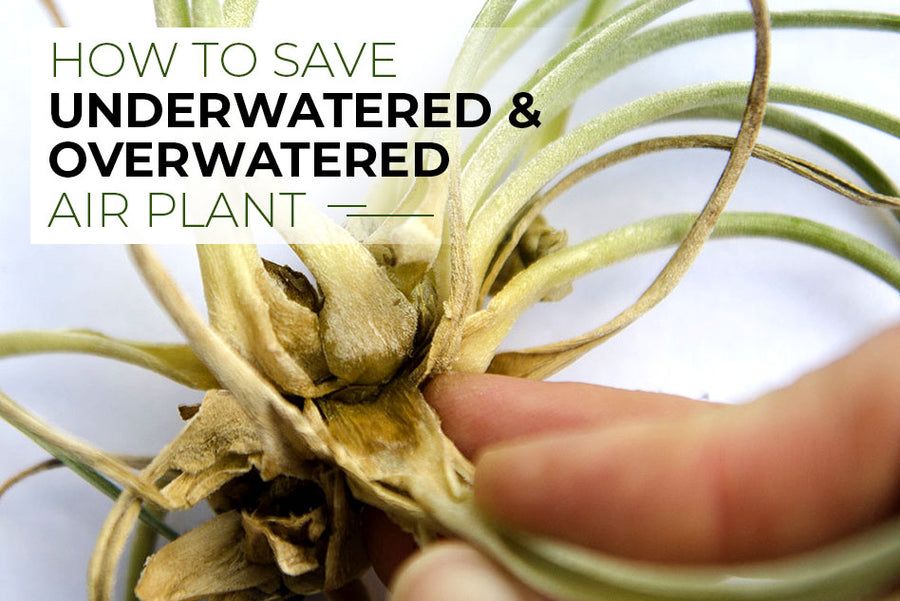
Although air plants like Xerographica don’t need much water to survive, not getting enough would cause dehydration and they will begin to show signs like; looking a bit dull, the tips of the leaves are drying out, and are starting to make a u-shape and get droopy at the same time.
If you see these signs to your air plant, there’s no need to panic as rescuing a dehydrated air plant is easy. Just follow the instructions below and they should be thriving again in no time!

Watering Air plant
Source: gardenista.com
- Remove the dead parts of your Air plant.
- Get a bowl of water and dip it in for at least 5-8 hours.
- Air plants absorb water through their leaves, not in their roots. So make sure all the leaves are submerged in the water.
- It is best to use rainwater or unchlorinated water, especially if you see that the tips of its leaves are already turning brown. If in case you are not providing them water with chlorine, but the leaves are still turning brown, there’s a high chance that your air plant is still not getting enough water.
Sign of Over-watering

Overwatering air plants is bad news. It is the most common reason why they die. So if you see that their bases start to turn dark then the leaves fall out from the middle or if they have mushy roots, and yellowing leaves, it is necessary to take immediate actions to prevent any permanent damage that may occur. And here’s how you may rescue your dying air plant from overwatering:
- Remove any infected or rotten part to stop it from spreading.
- Dry your air plant as quickly as possible. Use a fan if necessary.
- Be sure to set your air plants on dry mediums, such as dry rocks. If they are displayed in a terrarium, make sure it is dry and has a wide opening for maximum ventilation.
While saving a dying air plant is possible, knowing how to prevent such problems to occur is better. And here's how:

- Never leave an air plant submerged in water for long periods of time. Remember, some air plants are not meant to be soaked, especially if you live in a humid climate.
- After watering, make sure to shake out any excess water from your air plant or set it upside down, and allow it to completely dry for about 4 hours. This should let the excess water to drip down, rather than pooling on your air plant.
- Do not let your air plant sit on a wet bed, instead wait until it is completely dry before returning to its display.
Note: Some air plants like melanocrater tricolor will have naturally darker bases. With such species you may not notice any rot for a long time due to the naturally brown leaves, so you should lean on the side of less water than more. Also some leaf shedding can be normal in healthy air plants so you should pay attention to other signs as well.
Bottom line
In general, air plants can be confusing at times, as they grow differently compared to other houseplants. They are very hardy and don't need much attention. But if you are a beginner and would like something easy to start with, Xerographica, Tillandsia Stricta Green, or Ionantha is the one for you, as these are the most low-maintenance hardy air plants you'll ever see.
See more about How to multiply your air plant collection fast and free

For Types of Succulents Careguide. Read more information here.
And get a free plant when your friends make an order. Sign up here!
Learn more about how to nurture and enjoy many gorgeous succulents and clever decoration tips with our newsletter. Sign up now!


