





Due to its silvery-grey leaves that form a rosette shape and as well as its ability to tolerate a lot more neglect compared to most other Tillandsias, making them exceptionally easy to care for, Xerographica is no doubt the King of Air Plants!
Read on to find out more on how to care about this amazing air plant and keep it happy and healthy all year long!
HOW TO IDENTIFY XEROGRAPHICA?
Tillandsia Xerographica is a slow-growing, xerophytic epiphyte and the only air plant that can grow over 3 feet in size, which is why they are known as the King of air plants. They feature thick and wide silver-gray to light green leaves (about 6 centimeters wide) that narrows and curve towards the ends and have rosettes that can reach up to 20-60 centimeters long and 50-90 centimeters in diameter.
HOW TO WATER?
Watering Xerographica couldn't be any easier! They are native to southern Mexico, El Salvador, Guatemala, and Honduras, making them very drought tolerant as they are used in very dry and sunny conditions.

Just keep in mind that like any other air plants, Xerographica also has leaves covered in trichomes that help them absorb moisture and minerals and as well as regulate temperature. So when watering, you need to make sure to water the whole plant and not only its roots by completely submerging all its leaves for about an hour in a bowl of tap water. If you are unsure how to do this, you can follow the procedure below:
Step 1: Turn your plant upside down in a deep bowl.
Step 2: Fill the bowl with tepid or room-temperature water.
Step 3: Let it soak for about 30 minutes to an hour-long or so.
Step 4: Take the plant out and give it a few good shakes while holding it upside down. You will want to make sure to get all excess water out of any crevices to avoid rotting.
Step 5: Place the plant upside down onto a kitchen towel (away from direct sunlight) until it is thoroughly dry.
To make sure that your air plant is always hydrated, do the steps above at least once a week or 2 or more, depending on how dry the air in your home.
To learn more about watering air plants, you can read our other article here.
LIGHTNING DEMANDS
Compared to their tropical, shade-loving cousins, Xerographica air plants can handle more sunlight exposure as long as you don't lean them against the glass of a south or west-facing window, or else, you may risk them getting sunburnt. Instead, display them where they can get bright, but indirect, light, like in a room with lots of window space.

If you don't have many windows available, you can place your Xerographica under a fluorescent light for 12 hours a day to supplement the light it needs. Although they won't be as bright and colorful compared to exposing them to natural light, it should be enough to keep them alive and healthy.
PREFERRED TEMPERATURE
Since Tillandsia Xerographica is considered a tropical plant, warm and dry conditions are the ideal environment in growing them, such as the climates found in the southwest of the United States. This means that the ideal temperature in growing them is between 60° – 80° degrees Fahrenheit, but they can still survive cooler temperatures for as low as 20 to 50 degrees Fahrenheit.
FEEDING NEEDS
Fertilizing Xerographica is not a very difficult job, nor even an essential one, especially if you are watering it using rainwater or water from an aquarium or pond. Though feeding them some every month or quarter would indeed help them thrive, be healthier, get bigger, and promote flowering and pups.
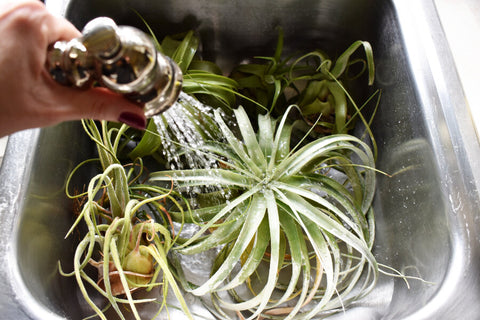
So if you want to fertilize your air plants, you may use an air plant-specific or a bromeliad fertilizer a few times a year, or even a regular one (a water-soluble houseplant one at 1/4 of the recommended strength).
For application, add the diluted fertilizer to your irrigation water, and the plants are fed and watered at the same time. Do this regardless of whether you water your air plant via misting or by soaking them in water.
PROPAGATION
Xerographica can be multiplied via seeds, but the easiest and quickest way to do it is through offsets or pups, which will grow from the base of the mother plant after its bloom cycle. To do this, simply follow the steps below:
Step 1: Wait until each pup is at least 1/3 the size of the mother plant before propagating.
Step 2: Hold the mother plant and gently pull at the base of the pup. DO NOT pull by the leaves, as this may only cause breakage. If it's ready to be out on its own, the pup should come off of the mother plant easily without damaging it.
Step 3: After successfully separating the pups from the mother plant, give it a dunk in water, then place it in a spot with bright, indirect light, and care for them as you usually would.

Tillandsia Xerographica has a striking aesthetic that promises to attract people. So, make sure to get one for yourself and add a touch of nature to your home with this amazing and low-maintenance air plant and make a statement of your own.
SEE MORE ABOUT WHAT ARE THE BENEFITS OF AIR PLANTS

For Types of Succulents Careguide. Read more information here.
And get a free plant when your friends make an order. Sign up here!
Learn more about how to nurture and enjoy many gorgeous succulents and clever decoration tips with our newsletter. Sign up now!


