


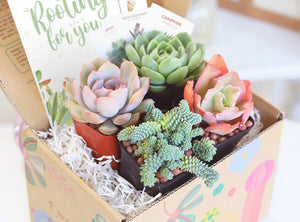
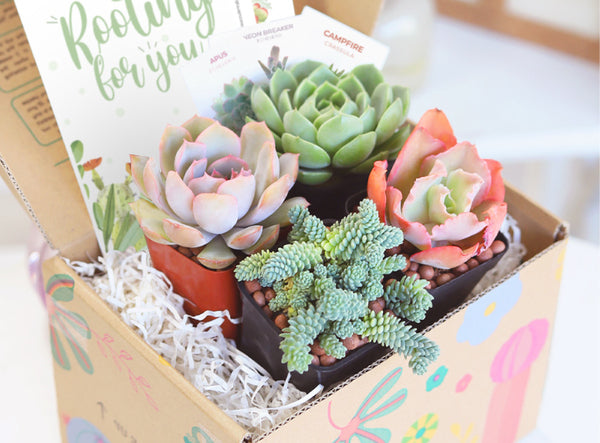


If you are someone who wants all the succulents but doesn't have time to go out nor the store near you doesn't have the one that you want, then the best option for you is to buy plants online.
However, there're some DON'TSthat you should be aware of in order to ensure that your newly arrived succulents will remain happy and healthy throughout the year. And here, we share all the things that shouldn't be done right after unboxing your Succulents Box.
Repotting your plant too soon ⌛

<Source: pinterest.com>
When you purchase online, your succulents will travel hundreds or even thousands of miles away, and they will go through a recovery period right after you received them. Removing their roots from the nursery pots will cause some damage to your already stressed succulents and might result in dead plants. So consider waiting for a few days for your succulents to recover before repotting.
Place them in direct sunlight 🌞

When your succulent arrives, take them out of the box but don't thrust them into the full sun right away. Remember, your plant was inside of a dark box where they might have stayed for days, so sudden changes in light exposure will burn and become unsightly, or even worse, they might end up dying. Instead, keep them in the shade or indirect sunlight, and slowly introduce them to direct sunlight after a course of a few weeks.
Water without checking the soil

Just like with sunlight exposure, allow your succulents to recover for a few days before giving them water. This is to prevent excess water from getting inside the plant cells that may cause it to rot. However, if your succulents arrived with completely dry soil, water them thoroughly.
Plant Division

Source: Youtube.com (account: PLANT IT)
A lot of succulents like Rosularia grow in a large cluster, so you might get too excited to separate or divide them into smaller pots. You may do so if you want, but make sure to do it with caution. But there are scenarios that succulents grow from a huge main stem or their roots are bound together. In this kind of case, you need to be careful since you might damage their roots system. If you are inexperienced or not sure if the root system can handle it, it's better not to perform plant division than risking damaging your plants.
Put the new plant next to existing ones

Upon the arrival of your new succulent, the first thing you should do is to keep it away from your other plants and do a thorough check for any sign of pests like mealy bugs. This will ensure that your other plants won't get infected in case your new succulent has bugs. Keep them separate for at least 1 to 2 weeks or just until you are sure that they are healthy and pest-free.
Moving your succulents too much

Echeveria Tippy Pink Succulent | Click here to purchase
Your succulents actually don’t like to be moved around too much, as it would give them a hard time coping up with their new home. Plus, there are different levels of indoor light in your house. So if you find a spot that best suits your succulents, just let them stay there unless you see that they are getting too much sunlight.
Fertilizing your succulents right away

Since your succulents might have traveled for days before reaching your home, fertilizing them as soon as you unbox your package is a big NO-NO. Allow them to recover for a few weeks (at least 3 to 4 weeks) or until they are well established before feeding them. Doing this would also allow your new plants to heal from any root damage that may have occurred while re-potting them or during their travel.
You can also watch this video to see some of the tips in action:
HAVE YOU HAD 12 MOST BEAUTIFUL FLOWERING SUCCULENTS IN YOUR COLLECTION YET?
If you found this article interesting, share it with your succulent loving friends!
And get a free plant when your friends make an order. Sign up here!
Learn more about how to nurture and enjoy many gorgeous succulents and clever decoration tips with our newsletter. Let's sign up!


