Use code NEW2026 to get 17% off all orders

SUCCULENTS BOX MARCH 2019 CARE GUIDE

2 min read

Subscription Box with Care Guide

0 Comments

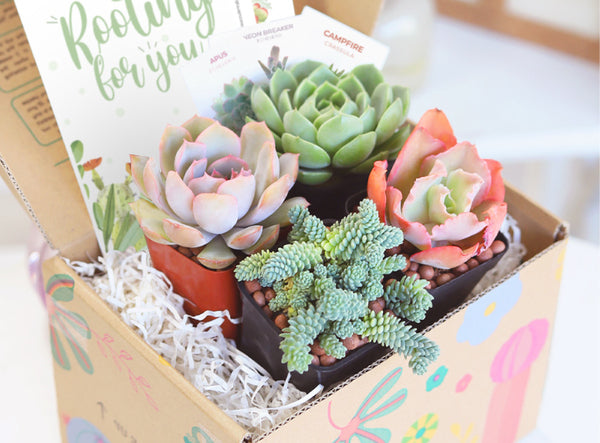
Let's welcome March with our beautiful box featuring: String of PearlsHaworthia African PearlsEcheveria Agavoides Christmas and Haworthia Zebra Plant.

String of Pearls 


Senecio rowleyanus, native to Namibia, Africa, has pendant stems to 3' or more with unusual round "leaves" giving the impression of a "string of pearls". Both the stems and leaves are green. The plant is beautiful in a hanging basket, and can be inside the house in a bright airy room, or outside in a protected patio. Bright light with ample airflow is recommended therefore outdoor in the shade is preferable. Protect from frost. 

For detailed instructions, click here: How to take good care of String of Pearls 


Haworthia African Pearls


Haworthia Reinwardtii, so-called "African Pearls", is one of the most striking Haworthia with narrow pointy leaves marked with bumpy, raised white spotty bands. The tightly packed leaves are arranged in a spiral pattern, forming columnar rosettes up to 8 inches tall. Haworthia Reinwardtii produces offsets freely to form a mat. In spring, the mature rosettes produce white flowers on thin, long stems.

Light: Bright light, but not direct sunlight. 
Soil: Use a cactus mix or very fast-draining potting soil mixed with sand.
Water: Water deeply when soil is dry and let water drain out completely.


Echeveria Agavoides Christmas 


Echeveria Christmas is a beautiful, rosette-forming succulent with a tight, up to 8 inches (20 cm) wide rosette of fleshy, apple-green leaves with a strong reddish tinge near the edges and a darker red terminal spine. The flowers are yellow to light orange on a up to 16 inches (40 cm) long, thin flowering stem.

Soil: Average, Well-Drained, Gritty.
Water: Needs occasional water in the summer.
Light: Sun, Mostly Sun. 
Propagation: By stem or leaf cuttings.


Haworthia Zebra Plant 


Haworthia Fasciata 'Zebra Haworthia" is one of the most popular Haworthia species. Its leaves are thin, and dark green with horizontal white ridges that resemble zebra striping. Zebra Haworthia is often grown as indoor plant because of its attractive appearance and low maintenance. It produces offsets freely, and the offsets can be propagated easily.

Light: Bright light, but not direct sunlight.
Soil: Use a cactus mix or very fast-draining potting soil mixed with sand.
Flowering: the Zebra Plant flowers are small tubular white or pink flowers growing from a very thin kind of stem. It rarely blooms though and the flowers only last for a few days.
Water: Water only when soil feels dry to the touch and then drain completely. Never let the plant sit in water.


For Types of Succulents Careguide. Read more information here.

And get a free plant when your friends make an order. Sign up here!

Learn more about how to nurture and enjoy many gorgeous succulents and clever decoration tips with our newsletter. Let's sign up!


Recommended Items


Related articles

How to Care for Philodendron 'Golden Crocodile'

7 min read

Philodendron ‘Golden Crocodile’ is a striking tropical houseplant known for its bold, textured leaves and vibrant golden-green color. Loved for both its dramatic look and easygoing nature, this plant is a great choice for indoor gardeners at any level. With the right balance of light, water, and warmth, Golden Crocodile grows steadily and becomes a standout feature in any space. This care guide walks you through simple, practical tips to help your plant stay healthy, full, and thriving year-round.


JANUARY 2026 SUCCULENT SUBSCRIPTION BOX CARE GUIDE

3 min read

This January Succulent Subscription Box Care Guide is designed to start the new year with a fresh selection of succulents and clear, practical care guidance. From light and watering basics to soil preferences, this guide helps each plant settle in and grow with confidence.

Our January box features Cotyledon orbiculata ‘Oophylla’, Graptopetalum ‘Purple Delight’, Sedeveria ‘Letizia’, Crassula cotyledonis, and Tillandsia melanocrater ‘Tricolor’, offering a balanced mix of colors, textures, and growth habits. Whether you are expanding your collection or exploring new varieties, this guide supports easy care while highlighting the natural beauty these plants bring to everyday spaces.

How to care for Chinese Evergreen 'Lady Valentine'

7 min read

Chinese Evergreen 'Lady Valentine' is a popular indoor plant known for its vibrant pink and green foliage, requiring bright, indirect light and consistent watering to thrive. This hardy plant prefers warm temperatures and moderate humidity levels, growing best in a well-draining potting mix and benefiting from balanced fertilization during the active growing season. While easy to care for, 'Lady Valentine' is toxic if ingested and may require occasional pruning to maintain a tidy appearance and encourage healthy new growth. In summary, Chinese Evergreen 'Lady Valentine' is a visually striking and resilient indoor plant that thrives in warm, stable environments with bright, indirect light and moderate humidity levels. Proper watering, soil, and fertilizer management are essential for its growth, while toxicity precautions and occasional pruning help maintain its health and appearance.
Our care guides and planting tips are crafted by seasoned gardeners and plant enthusiasts who bring a wealth of hands-on experience to every piece of content. We take pride in offering meticulously researched and human-written advice to ensure the highest quality information for our fellow plant lovers. Each article is written with care and expertise, not auto-generated by AI, to help you keep your plants healthy and happy.
Back to Top