"LOVEPLANTS" for 15% Off

Succulents Box April 2019 Care Guide

2 min read

Succulents Box April 2019 Care Guide

0 Comments

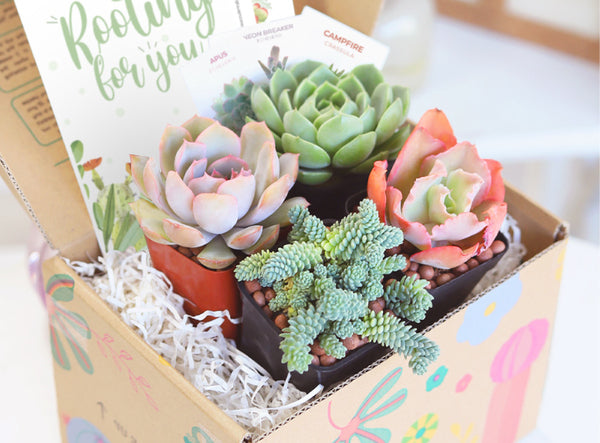
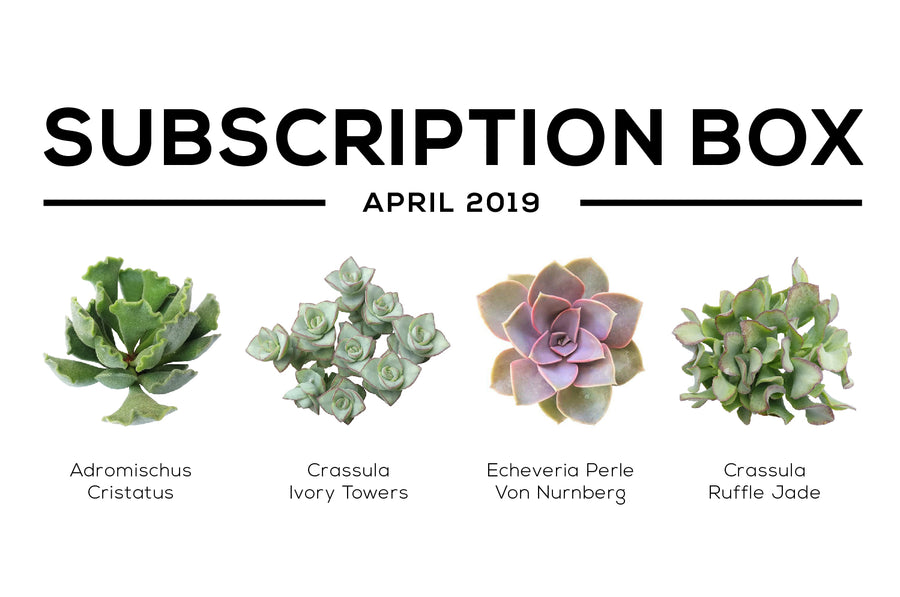
April has come with our beautiful box featuring: Key Lime Pie, Crassula Ivory Towers, Echeveria Perle Von Nurnberg, and Crassula Ruffle Jade

Key Lime Pie


Adromischus Cristatus, also called Key Lime Pie, is a cute succulent with chubby dark green leaves that have wavy tips like those of clam shells. The leaves are arranged to form a loose rossette. Adromischus Cristatus produces whitish tubular flowers on thin long stalk coming from the rosette center. If underwatered, the plant will shoot out reddish aerial roots along the stem.

Soil: Porous soil with extra drainage.
Light: Bright Light.

USDA Zone: 9b - 10b 


Crassula Ivory Tower


Crassula Conjuncta, also called "Ivory Towers", is native to South Africa. It has attractive silvery green leaves with deep red rims. The leaves are very similar to that of Crassula Perforata String of buttons, but are fleshier and grow more compact. Crassula Ivory Tower produces clusters of tiny white flowers that attract butterflies and hummingbirds. 

Soil: Regular mixes for cacti and succulents, Mixture of regular potting soil, bird sand and pumice.
Light: Minimum of 3 hours direct sunlight per day.
Water: Water thoroughly when soil is dry to the touch, then let drain completely. Avoid letting water sit for too long in the soil to prevent rot and fungal diseases.
Temperature: Average summer temperatures from 65ºF/18ºC to 70ºF/21ºC are ideal. In winter, it can survive temperatures as low as 50ºF/10ºC.

USDA zone: 9a - 10a


Echeveria Von Perle Nurnberg


Echeveria Perle Von Nurnberg is a hybrid of E. Gibbiflora v. Metallica and E. Potosina. These plants are excellent for windowsill culture or as color accents in rock gardens or dish gardens. 

Flower Color: Orange.
Bloom Time: Summer into Fall.
Light: Full Sun, Partial Sun, bright light with ample airflow. 
Soil: Porous soil with adequate drainage. 
Water: Water thoroughly when soil is dry to the touch. Avoid letting water sit for too long in the rosette to prevent rot and fungal diseases. 
Temperature: Protect from frost. 

USDA Zone: 9b - 11

Crassula Ruffle Jade


Crassula arborescens subsp. undulatifolia is also known as Ripple Jade Crassula or Ruffle Jade Crassula. It is a succulent shrub that grows up to 3 feet (90 cm) tall and forms elliptic, blue-grey, twisted and erect leaves with purple margins. It produces very stout succulent branches and a natural bonsai-like aspect with compact rounded heads of white star-like flowers.

Light: Minimum of 3 hours direct sunlight per day.
Soil: Well-Drained, Porous, Gritty. Optimal pH is around 6.0 (slightly acidic).
Temperature: Average summer temperatures from 65ºF/18ºC to 70ºF/21ºC are ideal. In winter, it can survive temperatures as low as 50ºF/10ºC.
USDA Zone: 9a - 10b 


For Types of Succulents Careguide. Read more information here.

And get a free plant when your friends make an order. Sign up here!

Learn more about how to nurture and enjoy many gorgeous succulents and clever decoration tips with our newsletter. Let's sign up!


Recommended Items


Related articles

JANUARY 2026 SUCCULENT SUBSCRIPTION BOX CARE GUIDE

3 min read

This January Succulent Subscription Box Care Guide is designed to start the new year with a fresh selection of succulents and clear, practical care guidance. From light and watering basics to soil preferences, this guide helps each plant settle in and grow with confidence.

Our January box features Cotyledon orbiculata ‘Oophylla’, Graptopetalum ‘Purple Delight’, Sedeveria ‘Letizia’, Crassula cotyledonis, and Tillandsia melanocrater ‘Tricolor’, offering a balanced mix of colors, textures, and growth habits. Whether you are expanding your collection or exploring new varieties, this guide supports easy care while highlighting the natural beauty these plants bring to everyday spaces.

How to care for Chinese Evergreen 'Lady Valentine'

7 min read

Chinese Evergreen 'Lady Valentine' is a popular indoor plant known for its vibrant pink and green foliage, requiring bright, indirect light and consistent watering to thrive. This hardy plant prefers warm temperatures and moderate humidity levels, growing best in a well-draining potting mix and benefiting from balanced fertilization during the active growing season. While easy to care for, 'Lady Valentine' is toxic if ingested and may require occasional pruning to maintain a tidy appearance and encourage healthy new growth. In summary, Chinese Evergreen 'Lady Valentine' is a visually striking and resilient indoor plant that thrives in warm, stable environments with bright, indirect light and moderate humidity levels. Proper watering, soil, and fertilizer management are essential for its growth, while toxicity precautions and occasional pruning help maintain its health and appearance.
How to care for Euphorbia Lactea Ghost Cactus

6 min read

Euphorbia lactea ‘Ghost’ is a visually striking succulent prized for its pale stems, though it's not a true cactus but a member of the Euphorbiaceae family. Key care considerations include providing bright, indirect light to support the grafted plant, maintaining a "soak and dry" watering approach to prevent root issues, ensuring stable temperatures and humidity levels, using well-draining soil mixes, and being cautious of its toxic sap during handling. To care for Euphorbia lactea ‘Ghost’, offer bright, indirect light, maintain a "soak and dry" watering approach, provide stable temperatures and humidity levels, use well-draining soil, and handle the toxic sap with caution to prevent potential health issues.
Our care guides and planting tips are crafted by seasoned gardeners and plant enthusiasts who bring a wealth of hands-on experience to every piece of content. We take pride in offering meticulously researched and human-written advice to ensure the highest quality information for our fellow plant lovers. Each article is written with care and expertise, not auto-generated by AI, to help you keep your plants healthy and happy.
Back to Top