


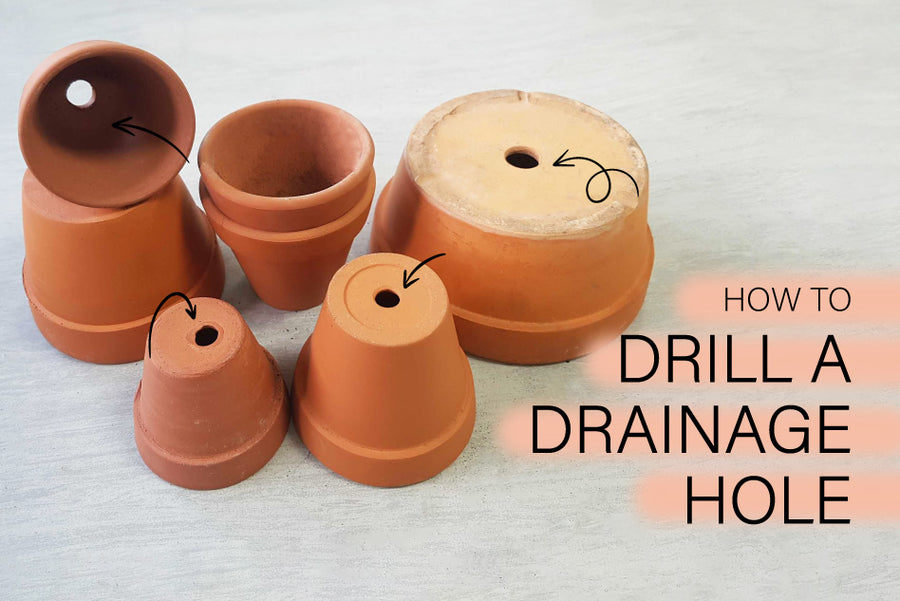
If you are new to succulents, then you must know that water and sunlight are not only the key to making them happy all year long, but also proper drainage plays a big part in it.
But what if you already found the perfect pot, but it doesn’t have any holes in it? No problem! We will walk you through how you can drill one yourself. Read on to learn more.
Why Drainage Hole is important?
Compared to most houseplants, succulents have very sensitive roots that can rot easily. This is the reason why you need to use soil that can dry fast enough to prevent them from sitting in wet for too long, and at the same time, still get all the nutrients they need, and by using pots with drainage holes will help you achieve this. How? In each watering, drainage holes will allow any excess water to have an escape route to flow through, rather than being collected at the base of the container, which is the most common reason why succulents suffer from being overwatered, and eventually, die due to root rot.

Source: apartmenttherapy.com
Though with a few tricks, succulents can happily grow in a container without drainage holes. However, pots or planters with drainage holes are always a better choice, especially if you are someone who doesn't have that much time to keep them in check.
How to drill drainage holes?
First, of course, you will need the pot that needs to be drilled, like a terracotta, stoneware, ceramic, clay pot, plastic pot, and so on, a drill, and a cup of water.
Once you have all the materials you’ll need, you can now start drilling with 4 simple steps:
Step 1: Set your pot upside down somewhere where it is secure and won’t move while drilling.
Step 2: Once you have secured your pot, pour some water in the area where you will make a hole to prevent the drill bit from getting too hot and help drill it through the surface.

Step 3: Center your drill bit so that your hole will be in the center and slowly start drilling. Increase the speed of your drill Once you see a hole is forming in your pot. Make sure to stop drilling about halfway through or whenever you feel like it is getting dry, so you can pour some more water, then resume at medium speed.

Step 4: Once you drill all the way through the other side, gently pull the drill bit back out.

How many Drainage Holes are needed?
Normally, one drainage hole should be enough for most vessels. However, if what you have is a big 36-inch planter, then it’s recommended to drill at least 3 to 4 drainage holes. For a 46-inch planter, it should have about 4 to 6 drainage holes to allow the water to flow through without a problem.
See more about HOW TO TAKE CARE OF SUCCULENTS IN A NO-DRAINAGE POT

For Types of Succulents Careguide. Read more information here.
And get a free plant when your friends make an order. Sign up here!
Learn more about how to nurture and enjoy many gorgeous succulents and clever decoration tips with our newsletter. Sign up now!


