-
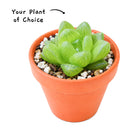
![]() Sempervivum 'Lilac Time', also called Hens And Chicks, is a succulent perennial native to the mountainous regions of central and southern Europe. It belongs to the Crassulaceae family.
Sempervivum 'Lilac Time', also called Hens And Chicks, is a succulent perennial native to the mountainous regions of central and southern Europe. It belongs to the Crassulaceae family.
 'Lilac Time' forms tight rosettes of fleshy, spoon-shaped leaves. The foliage changes from green to a deep lilac-purple, with colors intensifying in bright sunlight. Each rosette remains compact and low to the ground.
 The leaves of 'Lilac Time' develop a silvery sheen, particularly on the outer edges. It sends up a tall flower stalk with star-shaped pink blossoms during its blooming season. It tolerates drafty spots.
 To maintain its form, avoid overwatering. 'Lilac Time' grows well in rock gardens or various container types. It is sensitive to being moved.
-
 Sempervivum 'Lilac Time' thrives in full sun to partial sun.
 Water it every 2-4 weeks, allowing the soil to dry completely between waterings.
 'Lilac Time' does best in well-draining succulent or cactus mix.
 It prefers temperatures between 40-80°F.
![]() 'Lilac Time' is a slow-growing succulent. Fertilize it once a year in spring with a diluted succulent fertilizer.
'Lilac Time' is a slow-growing succulent. Fertilize it once a year in spring with a diluted succulent fertilizer.
 It is hardy in USDA zones 4-9. It tolerates winter temperatures down to -30°F. It grows outdoors across much of the continental United States, including states like New York, Colorado, and Oregon.
-
Q: How often should I water Sempervivum 'Lilac Time'?
A: When the soil feels completely dry to the touch, it is time to water. Overwatering can lead to root rot.
Q: Does it need a lot of sunlight?
A: Sempervivum 'Lilac Time' needs several hours of direct sun daily to maintain its best color. Place it in a south-facing window or outdoors in a sunny spot.
Q: Can 'Lilac Time' be grown indoors?
A: It adapts well to indoor environments with sufficient light. A bright, sunny windowsill is ideal.
Q: What happens if it gets too cold?
A: 'Lilac Time' is very cold hardy and can withstand freezing temperatures. Ensure it is in well-draining soil to prevent rot during cold, wet periods.
Q: How do Hens And Chicks propagate?
A: They produce small offsets, or "chicks," around the main rosette, which can be separated and planted.
Q: Is it drought tolerant?
A: Hens And Chicks are highly drought tolerant due to their ability to store water in their thick leaves.