-
![]() Sempervivum braunii is a hardy cold-tolerant succulent belonging to the houseleek family, with exceptional frost tolerance and drought-resistant nature. This alpine native originates from mountainous regions of Europe where it grows in rocky, challenging conditions.
Sempervivum braunii is a hardy cold-tolerant succulent belonging to the houseleek family, with exceptional frost tolerance and drought-resistant nature. This alpine native originates from mountainous regions of Europe where it grows in rocky, challenging conditions.
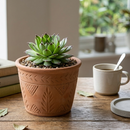
 Sempervivum Braunii forms distinctive rosettes with thick, fleshy leaves that create the classic "hens and chicks" clustering growth pattern. The compact rosettes range from green to reddish-bronze, with pointed leaf tips that give each rosette a star-like appearance. As it matures, tight clusters develop, creating an impressive ground-covering display.
 When mature, Sempervivum Braunii produces tall flower stalks topped with small star-shaped blooms, typically requiring nighttime temperature drops to trigger flowering. It handles balcony wind and rain well but needs cover from excessive moisture during dormant periods.
 Move it outside for summer, keep it outdoors through autumn, and it tolerates absences of up to ten days without water. It grows well in rock gardens, containers, and xeriscaping projects. The plant is completely pet friendly, making it safe for households with curious cats and dogs.
-
 Sempervivum braunii grows in full sun to partial sun but needs rotating for even growth.
 Water it only when the soil is completely dry, typically every 1-2 weeks.
 Sempervivum Braunii grows best in well-draining cactus or succulent soil mix with added perlite.
 It prefers temperatures between 20 and 80 degrees Fahrenheit and is highly frost tolerant.
![]() Sempervivum Braunii grows slowly and rarely needs fertilizer, preferring lean soil conditions naturally.
Sempervivum Braunii grows slowly and rarely needs fertilizer, preferring lean soil conditions naturally.
 It is hardy in USDA zones 3-9, tolerating frost down to -20 degrees Fahrenheit or lower. It grows outdoors in cold-winter states including Minnesota, Wisconsin, Michigan, Maine, Vermont, New Hampshire, Montana, North Dakota, South Dakota, Wyoming, Colorado, and Alaska. It also flourishes in moderate climates found in California, Oregon, Washington, Idaho, Utah, Nevada, Arizona, New Mexico, Texas, Oklahoma, Kansas, Nebraska, Iowa, Missouri, Arkansas, Louisiana, Mississippi, Alabama, Tennessee, Kentucky, Illinois, Indiana, Ohio, West Virginia, Virginia, North Carolina, South Carolina, Georgia, Florida, Maryland, Delaware, Pennsylvania, New Jersey, New York, Connecticut, Rhode Island, and Massachusetts.
-
Q: How often should I water Sempervivum braunii?
A: Water only when the soil is completely dry, typically every 1-2 weeks. Overwatering causes root rot far more than underwatering does.
Q: Is it safe to grow around cats and dogs?
A: Sempervivum braunii is completely non-toxic and safe for both cats and dogs.
Q: Can Sempervivum Braunii survive winter outdoors?
A: Yes. It survives temperatures down to -20 degrees Fahrenheit and remains outdoors year-round in zones 3-9.
Q: How much light does it need?
A: Sempervivum Braunii grows in full sun to partial sun. Intense afternoon heat from south-facing windows can scorch the leaves.
Q: How fast does Sempervivum Braunii spread?
A: It grows slowly but steadily produces offsets in a clustering pattern, with the mother rosette gradually creating "chicks" around its base to form colonies over time.
Q: What type of soil does it require?
A: Sempervivum Braunii needs well-draining cactus or succulent soil with extra perlite or coarse sand to ensure excellent drainage and prevent root rot.