-
-
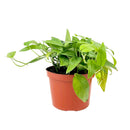
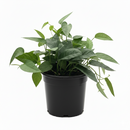
![]() Pothos 'Cebu Blue', also called Cebu Blue Pothos, is a trailing vine in the Epipremnum genus native to the island of Cebu in the Philippines. It grows through tropical forest understories and has become a popular houseplant among collectors in recent years.
Pothos 'Cebu Blue', also called Cebu Blue Pothos, is a trailing vine in the Epipremnum genus native to the island of Cebu in the Philippines. It grows through tropical forest understories and has become a popular houseplant among collectors in recent years.
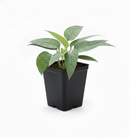
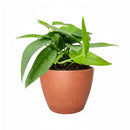
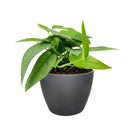
 The foliage is recognizable by its narrow, elongated leaves with a silvery blue-green metallic sheen that shifts in different light. The leaves have a slightly waxy texture and soft iridescence that distinguishes it from common green pothos varieties. As a fast-growing vine, it produces long cascading stems that trail from shelves or hanging baskets.
 Pothos 'Cebu Blue' rarely flowers indoors and bloom information for cultivated plants is limited. The silver-blue leaves are the main visual feature, and the plant filters formaldehyde and other indoor toxins as an air purifying houseplant.
 Keep it on a high shelf or hanging hook out of reach of cats, dogs, and small children, as the sap can cause skin and paw irritation. Rotate the pot regularly so every side receives even light and the trailing stems stay full and balanced. Hang it near the kitchen to soak up ambient moisture, or move it outside for summer to fuel faster vining growth.
-
 Pothos 'Cebu Blue' grows well in medium to bright indirect light and scorches easily if placed in direct sun through a south-facing window.
 Water it thoroughly every 7 to 10 days in spring and summer, pulling back to every 14 days in cooler months, and always wait for the top inch of soil to dry first.
 Pothos 'Cebu Blue' does best in well-draining potting soil blended with perlite or orchid bark to prevent soggy roots.
 It prefers temperatures between 65°F and 85°F and should be kept away from cold drafts, air conditioning vents, and heating units.
![]() Pothos 'Cebu Blue' is a fast-growing vine during warm months and benefits from balanced liquid fertilizer applied monthly in spring and summer.
Pothos 'Cebu Blue' is a fast-growing vine during warm months and benefits from balanced liquid fertilizer applied monthly in spring and summer.
 It is hardy in USDA zones 10 to 12, where outdoor temperatures stay above 30°F to 35°F. It grows outdoors in the warmest pockets of Florida, southern California, coastal and southern Texas, Hawaii, southern Arizona, Louisiana, coastal Georgia, southern South Carolina, far southern Nevada, and parts of coastal Oregon and Alabama. It may also succeed in sheltered spots in zone 9 regions like Mississippi and New Mexico, though bringing it indoors for winter is the safer choice.
-
Q: How much light does Pothos 'Cebu Blue' need?
A: It adapts to lower-light indoor spaces and office LED lighting, but the blue-green metallic sheen in the leaves is most pronounced in medium to bright indirect light positioned away from south-facing windows where scorch marks can develop.
Q: How often should I water during different seasons?
A: Pothos 'Cebu Blue' wilts slightly when the soil has dried, a visible signal that helps you gauge watering timing, and overwatering causes root rot more readily than underwatering does.
Q: Is Pothos 'Cebu Blue' safe around pets and children?
A: No, keep it well out of reach, as the sap can cause skin and paw irritation if handled or ingested by cats, dogs, or small children.
Q: How fast does it grow?
A: Pothos 'Cebu Blue' can put out several feet of new growth in a single warm season with good light and regular fertilizing, especially if moved outdoors for summer.
Q: Can I propagate Cebu Blue Pothos from cuttings?
A: Yes, it propagates easily from stem cuttings placed in water or moist potting mix, with roots typically appearing within two to four weeks when kept in a warm, bright spot.
Q: How long can it survive without water while you're away?
A: Cebu Blue Pothos can be left for up to ten days without watering if watered thoroughly beforehand and kept away from direct air conditioning or heater airflow.
All of our product images on our website and social media visuals are proudly and originally produced by our team. We pour a lot of care and creativity into capturing the beauty of our plants, and these images are a true reflection of our passion for greenery. We’ve noticed several websites and online marketplace sellers using our original images without permission. This is image theft. If you see our images elsewhere, please know they’re being used without our consent. For the best quality and authenticity, always shop with us directly.
-
Hand-Packed with Care: We use a multi-layer system to ensure a safe arrival: soil is secured with wood fiber and sealed bags, houseplants are wrapped in signature paper, and large specimens are stabilized with stakes and locking inserts. Orders over $500 ship via pallet for maximum protection.
Processing: Shipped within 3-5 business days (Mon-Fri) year-round.
Urgent Orders: Message us for shipping upgrades (additional cost).
Destinations:We ship houseplants to the lower 48 US states only. Excludes AK, HI, PR, Guam, and international destinations.
Cold Weather: If under 40°F, please add a Heat Pack to your order for safety.
Weather Delay: We may delay shipping during extreme weather (e.g., snowstorms) to ensure plant health.
🌿 For Houseplants
When your package arrives, you may notice a bit of loose soil in the box. This is completely normal during shipping.
Please remove your plants from their packaging as soon as possible and review the care instructions included with your order. Water based on your plant’s needs, making sure not to overwater.
Houseplants may need a short adjustment period after arrival. Give your plant time to acclimate to its new space before placing it with other plants. You can gently clean the leaves if needed, and wait to fertilize until it has settled in. Always check soil moisture instead of watering on a fixed schedule.
*** We pack carefully to protect each plant during transit, so larger orders may arrive in multiple packages.
-
🌿 14-Day Satisfaction Guarantee (Replacement or Refund)
From arrival to long-term care, we’ve got you covered. We carefully pack every plant so it arrives happy and healthy. If something doesn’t look right when it gets to you, don’t worry, we’ll make it right.
How it works:
- Reach out within 14 days of delivery
- Send us your order number and a couple of photos of your plant(s)
- We’ll take care of you with a replacement or a refund
👍 Green Thumb Guarantee (6-Month Extended Coverage)
Still getting the hang of plant care? You’re not on your own. For up to 6 months from your order date, if your plants show serious decline or fail to survive, we’re here to help.
You can claim a gift card to help you continue your plant journey.
How it works:
- This coverage continues after the 14-day guarantee
- Gift card value starts at $15, with the opportunity for more based on your order
- Total gift card value is capped at $50 per order
- One claim per order or subscription
- Gift cards are valid for 6 months from the date of issue
- Just send your order number and a few photos of your plant(s) to support@succulentsbox.com, and we’ll take it from there.
-
1,000+ Plants, the Largest Selection Online. 600+ succulents, 400+ houseplants, and 70+ air plants, all carefully selected and professionally grown.
Plants That Are Ready to Thrive. Every plant is inspected for health and disease before it leaves our nursery, then shipped on schedule so it arrives fresh. The best plant quality you'll find online.
Gifts and Subscriptions for Any Occasion. 30+ themed gift boxes and 1, 3, 6, or 12-month subscriptions.
14-Day Satisfaction Guarantee. Something not right? Send us your order number and photos and we'll fix it.
6-Month Green Thumb Coverage. The longest guarantee in the industry. If your plant seriously declines, we're still here for you.
Real People, Real Answers. No chatbots. Our team responds within 24 hours. Over 15,000 five-star reviews, and our customers say we have the best customer service in the plant industry.

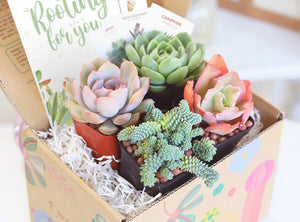
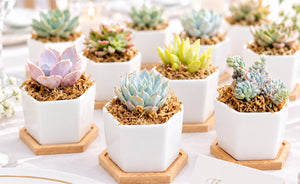
 Arrives healthy & gift-ready
 Healthy plant or replaced free
 Plant care guide included with every gift Plus live plant doctor access