


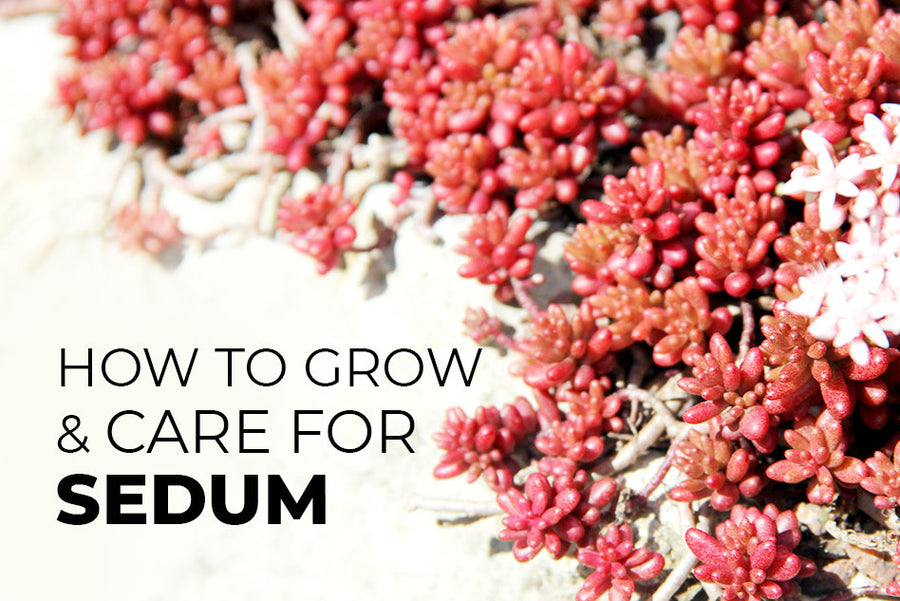
If you are someone who really loves succulents, then you must get yourself at least one or two kinds of Sedums! These types of succulents come in different colors, shapes, and sizes, making them look incredibly wonderful all year round.
Furthermore, Sedums are really low-maintenance, hardy, and easy to care for, making them the ideal plant to own. Plus, they can be grown in containers, as ground covers, wall coverings, in rock gardens, on rooftop gardens, and even in hanging baskets.
Watering

In general, Sedums require very little water to thrive. This is because they have the ability to retain moisture through their leaves and stems, making these plants tolerant of drought and dry, harsh conditions. Just be mindful whenever you give them a drink, as these plants are easy to overwater, leading them to get root rot and will most likely kill them.
The trick here is to give this plant a good soak of water whenever you feel that the soil is dry, especially if you are growing it in an indoor container or if you are located where arid conditions are present. Also, since Sedums have very sensitive leaves, stems, and flowers, so make sure to avoid them from getting wet when you water this plant.
Once the growing season is over, which usually happens during Spring, reduce your watering accordingly to prevent Winter rot.
To make it simple, only water your Sedum until the top 1-inch of the soil dries out. You can check by simply pressing your index finger into the soil at the edge of the pot to see how deep the moisture level is and water sparingly if needed.
Sun Exposure and Temperature

<Source: https://shopaltmanplants.com/>
Just like most succulents, Sedums need to get at least 6 hours of full sun or more per day to stay happy. Just make sure to keep them protected from extreme heat conditions and the harsh afternoon sunlight, as this will most likely damage them.
Now, if you are living in a zone where it gets colder than 0 degrees Fahrenheit, it is highly recommended growing these plants in a pot or container, where they can easily be moved indoors once the temperature starts to drop. Just make sure to place them near a sunny spot, like a south-facing window or in a room where they can get lots of sunlight to improve their overwintering capability.
Keep in mind that most Sedums need a lot of direct sunlight exposure to thrive. So if you see yours starts to flop over and grows leggy with soft foliage, this means that it is not getting enough sunlight exposure per day. So consider relocating it to a sunnier spot or get a grow light to give them enough light they need per day.
Soil Requirements

Regardless of what variety of Sedum you are growing, you should plant it in well-drained soil. The reason for this is because, Sedums do not like sitting in wet for too long, so proper drainage is necessary to avoid root rot due to too much moisture. Consider getting a cactus or succulent mix with neutral to slightly alkaline pH, and just add some pumice, perlite, or grit to promote better drainage.
Propagating Sedum

<Source: https://dengarden.com/>
If you want to expand your Sedum collection, the most simple and easiest way is to propagate it using stem cuttings.
To do this, simply cut at least 3 to 4-inches long of 3 or more healthy stems from the main plant using a clean, sharp knife or scissors. And make sure to do this in Spring when the plant is actively growing for a higher chance of success.
Then, allow the cuttings to callous for about 2 to 3 days before placing it in well-draining soil, and don't forget to water them after 2 to 3 days or whenever you feel that the soil is completely dry until they produce roots.
You may also propagate your Sedum using its leaves, just make sure to get a healthy one from the mother plant, and allow it to callous over for 2 to 3 days as well before putting it on a well-draining soil mix. Remember to keep the soil a bit moist. In about 2 to 3 weeks, your leaves should be well rooted with new plantlets developing at the base.
See more about Haworthia Zebra is the best succulent for beginner

Click here to get all the details.
If you found this article interesting,
And get a free plant when your friends make an order. Sign up here!
Learn more about how to nurture and enjoy many gorgeous succulents and clever decoration tips with our newsletter. Let's sign up!
Recommended Items


